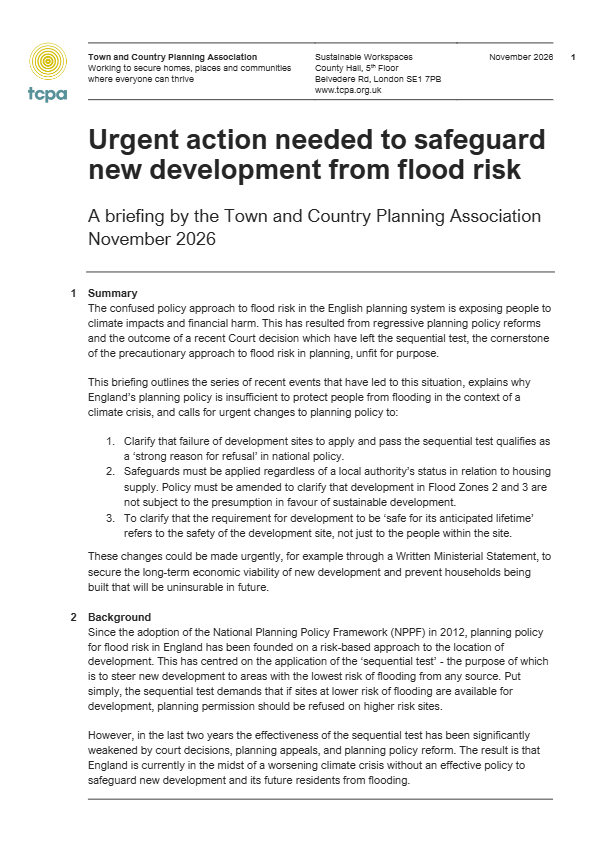
The approach to avoiding flood risk through the planning system in England is no longer fit for purpose, this briefing from the Town and Country Planning Association argues.
The impact of the climate crisis is being felt across our towns and cities, with more extreme weather and an increased risk of flooding. In 2026 and into 2027, the impacts of a strong El Niño further increases the risk of extreme weather.
But at the same time these impacts are making themselves felt across England, changes to the way flood risk is dealt with in the planning system means it is no longer able to protect people from flooding.
Why England’s flood risk policy isn’t fit for purpose
- The cornerstone of the precautionary approach to flood risk in planning is the ‘sequential test’, which demands that if sites at lower risk of flooding are available for development, planning permission should be refused on higher risk sites.
- Over the last two years the sequential test has been significantly weakened by court decisions, planning appeals, and planning policy reform.
- The result is that England is currently in the midst of a worsening climate crisis without an effective policy to safeguard new development and its future residents from flooding.
Why this matters
The planning system is a vital protection against the rapidly increasing risk of flooding. By weakening its approach flood risk, we risk developments being built in flood prone areas, putting communities at unnecessary risk.
In turn, this will impoverish residents through high insurance and maintenance costs – particularly as the insurance industry warns increasingly vocally that the future insurability of new homes built in flood risk areas is being called into question.
What needs to change
The briefing calls for urgent changes to planning policy. Specifically, to:
- Clarify that failure of development sites to apply or pass the sequential test qualifies as a ‘strong reason for refusal’ in national policy.
- Policy must be amended to clarify that development in Flood Zones 2 and 3 are not subject to the presumption in favour of sustainable development.
- To clarify that the requirement for development to be ‘safe for its anticipated lifetime’ refers to the safety of the development site, not just to the people within the site.
Download the full briefing.