Today, a group of over 60 local authorities, businesses and NGOs are calling on the government to scrap plans that could spell the end of zero carbon homes in England.
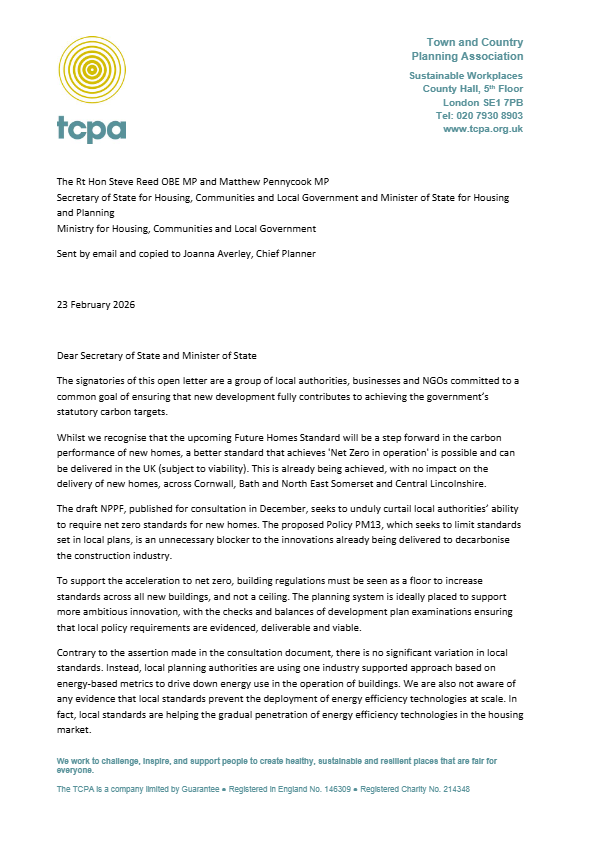
In a letter to the Rt Hon Steve Reed MP, the Secretary of State for Housing, and Matthew Pennycook MP, the Minister of State for Housing and Planning, coordinated by the Town and Country Planning Association (TCPA), the group states that the draft planning polices would limit local authorities from setting high environmental standards for new homes. The letter says this is an unnecessary blocker to innovation which will stall the decarbonisation of the construction industry.
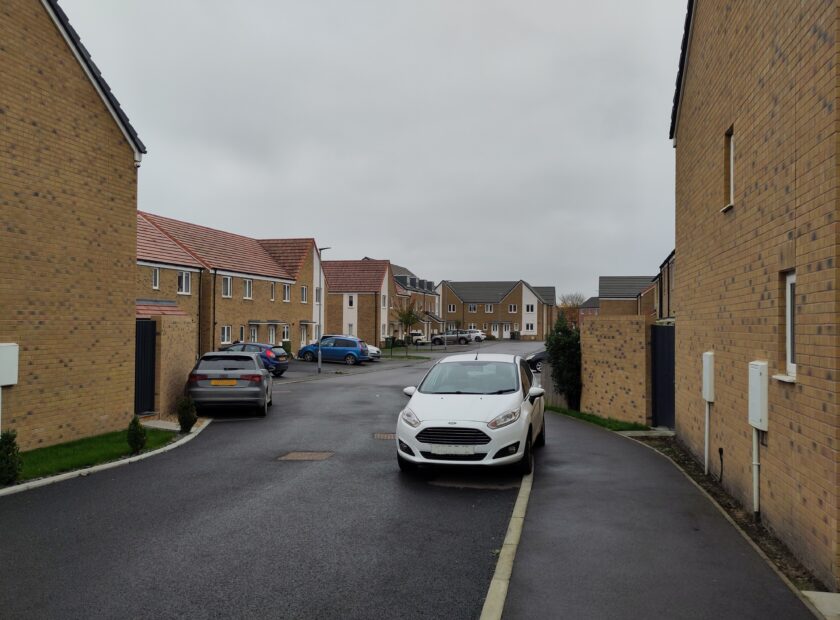
Currently, local authorities in some areas including Cornwall, Bath and North East Somerset and Central Lincolnshire require all new homes to be ‘zero carbon’ in operation, meaning the energy used to run a home once it’s built does not use any fossil fuels. To achieve this, homes need to be built to high energy efficiency standards, which also means cheaper energy bills for residents. But proposed changes to the National Planning Policy Framework (NPPF), which are currently being consulted on, would curtail local authorities from setting standards that go beyond building regulations.
While the letter recognises that planned changes to the building regulations through the Future Homes Standard will be ‘a step forward’, the TCPA and others argue that this will not go far enough in achieving genuinely zero carbon homes and could lock people into fuel poverty in future. Higher standards could be delivered more quickly in many parts of the UK with no impact on the delivery of new homes.
The Climate Change Committee (CCC) is clear that the UK’s housing stock will need to reach nearly complete decarbonisation for the UK to meet zero emissions by 2050 but has repeatedly warned that this is significantly off track to meet national carbon reduction targets. With the government’s drive to build 1.5 million homes this parliament, it is vital that as many of these homes as possible are built to zero carbon standards now to meet these national targets.
The signatories of the letter are calling on the Secretary of State to rethink policy PM13 in the draft NPPF, to make it clear that until building regulations universally achieve net zero buildings,1 local planning authorities may adopt standards that go further, so long as such policy is evidenced and viable.
The letter also expresses concern that no Environmental Assessment of the impact of this policy change has been made available and calls for its urgent publication ahead of the NPPF consultation deadline of 10 March 2026.
Co-signatories to the letter include over 40 local authorities; leading national environmental NGOs including UK100 and Friends of the Earth; and organisations and businesses at the forefront of the low carbon buildings sector including the UK Green Building Council, Good Homes Alliance, LETI and Bioregional.
Hugh Ellis, Director of Policy at the Town and Country Planning Association said:
‘Building regulations must be seen as a floor to increase standards across all new buildings, not a ceiling. The planning system is ideally placed to support more ambitious innovation on climate, and it is disappointing to see a downgrading of standards when the stakes couldn’t be higher.’
Councillor Lee Scott – Cabinet Member for Housing, Planning and Regeneration at Essex County Council said:
‘Here in Essex, we have developed a clear policy landscape to deliver new homes that are healthier to live in, cheaper to run, more resilient to a changing climate, and that generate as much renewable energy as they use, reducing pressure on the grid.
‘Eight of our district councils have aligned their local plans to these standards, including the Uttlesford local plan which the planning inspectors recently found to be sound, legally compliant and capable of adoption. This will lead to the delivery of over 145,000 healthy, energy efficient, ‘net zero’ new homes by 2050.
‘Essex has shown that building to this high standard is technically, legally and financially viable. The freedom of local authorities to set energy performance standards that go beyond building regulations should not be limited, but rather encouraged, to enable them to build homes that are fit for the future and that deliver a raft of benefits to residents today.’
Christopher Hammond, Chief Executive of UK1000 said:
‘Councils across the UK want to deliver homes and buildings that are cheap to run and warmer places to be in. Across England, from Cornwall to Central Lincolnshire, they’ve spent years developing rigorous, evidence-based, viable plans to deliver comfortable, energy-efficient, affordable homes. The proposed NPPF would block this from happening in the future. We are co-signing this letter, because local leaders need a planning system that matches their ambition — not one that centralises power in Whitehall forevermore and frustrates their power to deliver the homes their communities deserve.’
Sue Riddlestone OBE, Chief Executive of Bioregional said:
‘At Bioregional, we’ve seen first-hand that meaningful collaboration between local authorities and developers can deliver quality, low-carbon homes without sacrificing the speed of build or commercial success. We’re committed to bridging the gap and finding shared solutions for the future of sustainable housing.’