Plug-in resources for embedding the rights, needs and voices of children and young people in planning policy
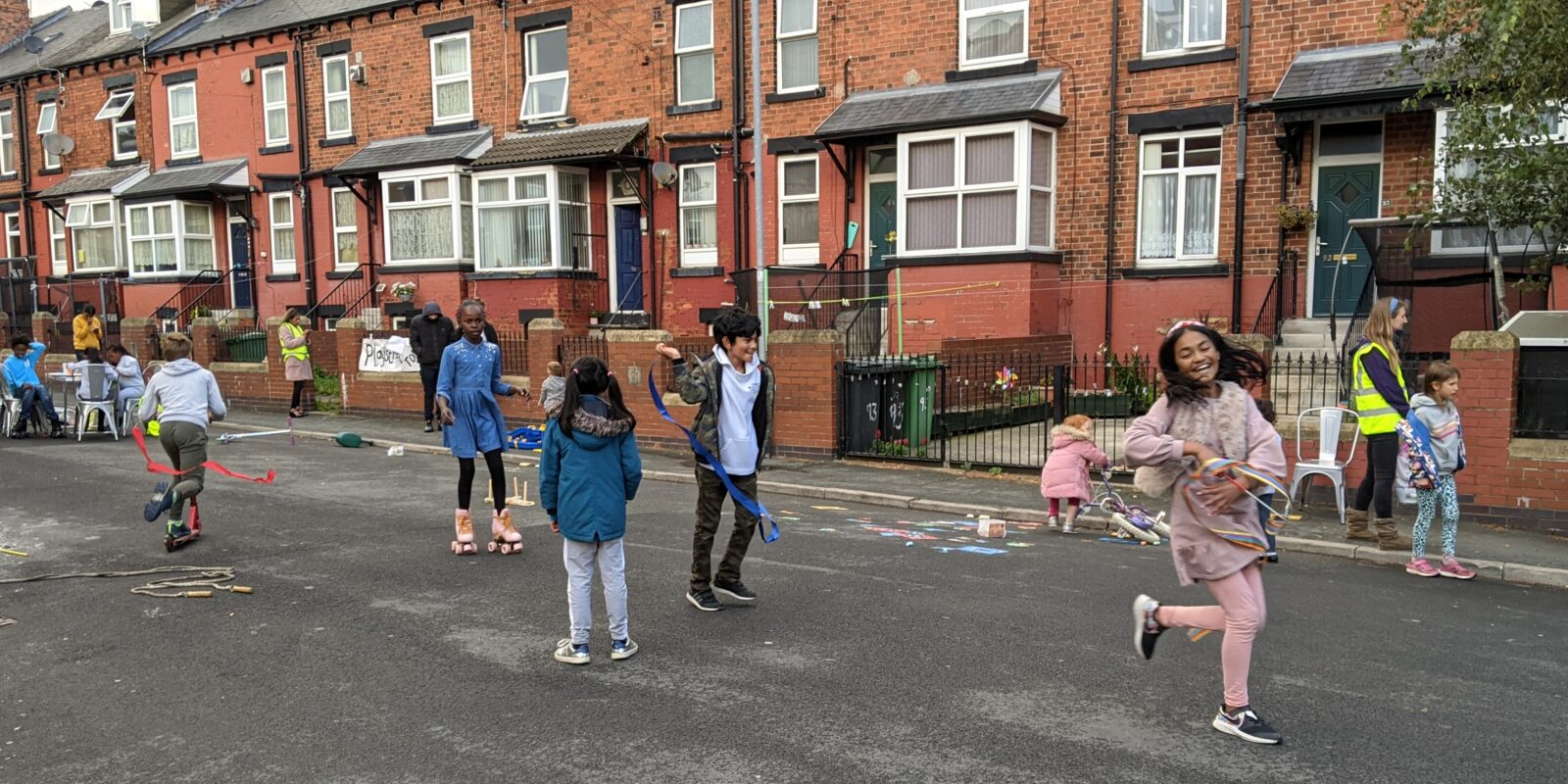
Photo: Play street, Playing Out CIC
These resources are part of a set of practical ‘plug-in’ materials for Local Plan policy teams. They are designed to support local planning authorities (LPAs) in England to embed the rights, needs and voices of children and young people consistently and effectively in Local Plans. The common definition of a ‘plug-in’ is a component that extends the functionality of an existing system without requiring the system to be re-built.
The resources have been developed in response to widespread recognition that the environments we are creating are not consistently working for children and young people. Places are too often shaped without adequate consideration of how children use the places and spaces where they live.
In both urban and rural settings, planning decisions made without consideration of children’s rights, needs and voices limit their ability to thrive.
Adopting a child-rights approach, the resources have been developed through a co-design process, including a workshop held in July 2025 with local authority officers, practitioners and researchers. The workshop explored how planning policy can better reflect the rights, needs and voices of children and young people, and identified a set of practical principles and priorities for Local Plans. Key themes included the importance of early integration in plan-making, the need for clear and concise guidance, and a focus on outcomes such as inclusive design, independent mobility, access to green space and play. The structure and content of this resource reflect these discussions, aiming to provide a practical, policy-ready tool that responds to the realities of plan-making in England.
There are three plug-in resources and a table of supporting resources:
- Background document – Provides the policy and evidence context for child-friendly planning, setting out why children and young people should be considered in Local Plans and how this aligns with national policy and wider duties.
- Baseline and self-assessment tools – Offers a practical framework to help authorities review existing policies and approaches, identify gaps, and prioritise actions using a simple scoring system.
- Child-friendly planning principles and policy prompts – Sets out a series of clear, policy-ready principles that can be embedded across existing Local Plan themes, supported by questions to ask and suggested wording.
Adopting consideration of children and young people in Local Plan policy is often in strategic alignment with and supportive of other plan objectives, such as promoting walkable neighbourhoods, delivering active travel infrastructure, improving access to green space, reducing carbon emissions and enhancing design quality. Rather than adding a new layer of complexity, this approach makes visible what is often overlooked.
The planning system is currently being reformed and in a period of transition. However, national planning policy and local objectives continue to provide a strong foundation for embedding the rights, needs and voices of children and young people in the design of the built environment. These resources are intended to be adaptable and capable of aligning with both the current framework and any future updates once adopted.
Children and young people – Local Plan plug-in resources
Supporting resources and further reading
This list is provided as a starting point for understanding child-friendly places and planning but is not an exhaustive list. Please also see the TCPA’s Children and Young People resources.
If you have suggestions for resources to add to the list please email: gemma.hyde@tcpa.org.uk
Voice
- Place Standard Tool Children and young persons version
- Voice Opportunity Power – youth engagement toolkit
- Engaging Young People in Consultations Toolkit
- Decision-making: children and young people’s participation – Guidance Scottish Government
- Family Voices Toolkit – engaging with parents and carers of young children
- Youth engagement-Local Trust
- Children’s Rights and Participation – Highland Resources
General
- United Nations Convention on the Rights of the Child (UNCRC)
- UN guidance on children’s right to a clean and safe environment (2023)
- Guide to creating urban public SPACES for children | Children’s Environmental Health Collaborative
- Children, young people and the built environment – House of Commons Library
- Raising the healthiest generation in history: why it matters where children and young people live Town and Country Planning Association (TCPA)
- RTPI Children and Town Planning
- Designing Child-Friendly High Density Neighbourhoods
- NSPCC Building Safer Communities for Children
Play – accessible, inclusive and embedded
- Play England
- Raising The Nation — A commission on play
- PiPA Play -inclusive provision in outdoor play
- Making Space for Play – Studio Ludo resources
- Managing Risk in Play Provision: Implementation guide – Learning through landscapes
- Better play in new developments – Lands Improvement
- Playing and being well – Play Wales
- Designing cities for play: The POpTED approach – World Playground Research Institute
- Mix and Match: Tools to Design Urban Play – Van Leer Foundation
- Children’s play in grey spaces
- Make Space for Girls
Autonomy, independent mobility, travel and wayfinding
- Healthy Streets | Making streets healthy places for everyone
- Playing Out
- Streets for play, streets for freedom: How a “child lens” would transform transport policy
- Sport England Active Design Principles
- Living Streets – walk to school
- Designing Streets for Kids Guide
- The Health Foundation – transport evidence hub
- Walk, Wheel, Cycle Trust – Children’s Walking and Cycling Index
Nature, green and blue space
- The Necessity of Urban Green Space for Children’s Optimal Development | UNICEF
- Nature-based play – Arup
- Natural England Children’s People and Nature Survey 2025
- Natural England Green Infrastructure Standards
- Public Health England Improving access to green spaces
- Fields in Trust
- Where are all the girls? Inclusive design lessons from Copenhagen
Care, education and youth facilities
- School Superzones | London City Hall
- School Streets — Mums for Lungs
- How to Evaluate Street Transformations Near Schools – Global Designing Cities Initiative
- Designing Child-Friendly High Density Neighbourhoods
Social infrastructure and intergenerational spaces
- Planning for Children and Young People and Intergenerational Futures
- Space to thrive: community spaces to support the mental health and wellbeing of children and young people – Locality
- Intergenerationality in the Context of Age-Friendly Cities and Communities – Resources – Housing LIN
- Creating Intergenerational Communities – Resource Library – Resources – Housing LIN
- Investigating Young People’s Views and Experiences of Social and Cultural Infrastructure in England, Scotland and Wales – The British Academy