Image credit: A Place in Childhood
A car-free 1970s housing estate that incorporates ample space for play and socialising, and has stood the test of time.
The rationale for taking a child-friendly approach
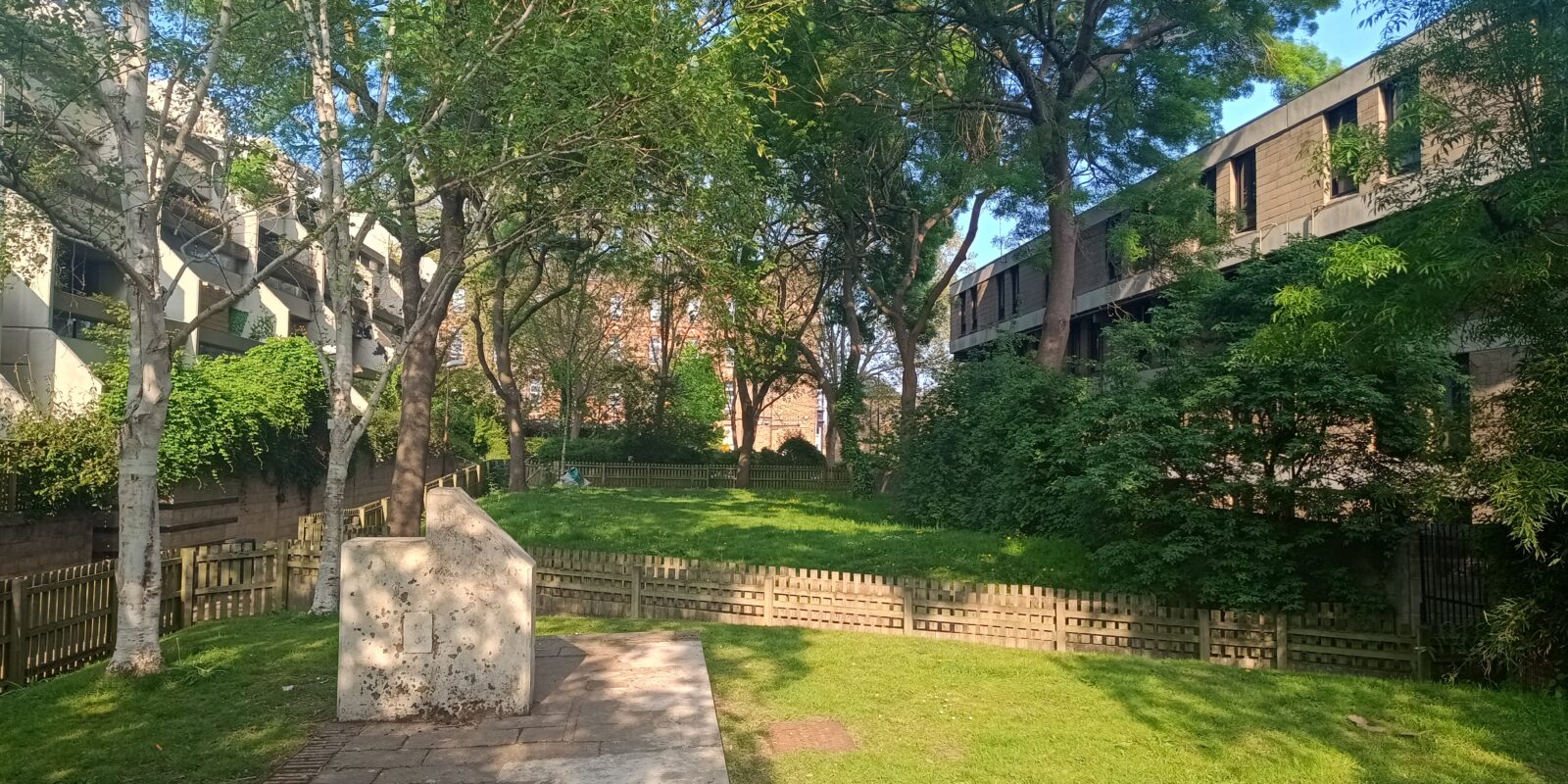
The Whittington Estate (or Highgate Newtown), often referred to as ‘The White Flats, was built by Camden Council in the 1970s as part of a broader vision for high-quality social housing. Designed by architect Peter Tábori, the estate aimed to go beyond basic provision, offering well-planned, flexible homes with generous outdoor space and a layout that encouraged sociability and safety.
Today, it remains home to many long-term residents and offers insights into how design can support community and children’s everyday lives. This short film (below) documents what it’s like to live and grow up there, from the perspective of children, young people and their families.
Children and young people’s experience
The estate’s design was not co-produced with children, but the lived experience shared in the film shows that many of its features support everyday play and independence. One child shared:
‘We play a lot more football, which I love… I never used to want to play for the school team… but now I’ve started to say yes.‘
This highlights how accessible space and neighbourly support foster growing confidence and participation. Another young person explained:
‘It’s really big, so there’s lots of space for running around,‘
This reflects the importance of generous, shared outdoor space in supporting physical activity and social play.
Residents also commented on the strong sense of neighbourliness, alongside an appreciation for the environment and the presence of the local children:
‘I love the simplicity of this place, the functionality, the light and the comfort and I just love living here. When I wake up, I sit up in my bed and I can smell the jasmine from my little secret garden and it is such a joy. And I love listening to the children playing after school and I love listening to them when they are going to school because they pass by my window and it’s a wonderful noise.’
Design features and living environment
The flats are arranged over two levels, with internal zoning, private balconies or patios, and shared spaces visible from kitchen windows—originally conceived as a form of ‘natural surveillance’. Partition walls and large windows support natural light and flexible living, while stepped terraces bring sunlight and greenery into the estate.
Residents speak positively about the amount of light, the functional layouts and the ease of adapting spaces to family needs. These qualities have allowed many to stay over the long term, with some families now in their second or third generation on the estate.
Planning and development context
The estate was completed just as national policy shifted away from council-led housing delivery. Tábori’s approach, shaped by influences from theatrical design and his time with Denys Lasdun, prioritised liveability, community interaction and access to the outdoors. The project reflects a brief period where public housing in the UK was ambitious in scope and intent.
Learning for other places
The Whittington Estate remains a functioning and well-used environment, particularly valued by residents for its sociability, safety and layout. The design has stood the test of time, although some families note limitations in space or access to amenities as their needs change.
Planning and design
- Thoughtful zoning and layout can support family life without large footprints.
- Private outdoor access and visual connections to shared spaces enhance safety and ease of parenting.
- Simple, robust materials and flexible design features (e.g. storage, sliding walls) remain relevant today.