For the past four and a half years, Denean Rowe has managed Planning Aid for London, the support service for communities to influence planning decisions and engage in the planning process.
I have been in steady employment for over 20 years and yet I still find it impossible to remember everything that I have done when it comes up to summing up a role. But as I begin to hand things over, there is no better time to reflect on my time at the TCPA and Planning Aid for London.
Connecting people and planning
As a lifelong Londoner, I have always had strong feelings about the availability of affordable homes, the need for good quality housing and how important it is to have access to green spaces. But my focus was usually on policy and trying to get people outside of the build environment policy world to engage in it, either by voting or engaging with policy makers.
Working at the TCPA and Planning Aid for London changed everything. I quickly found myself trying to find new and engaging ways to explain to people that their concerns about design, quality, density and infrastructure are all planning! And to explain that the right to comment on planning applications is important, but you can also influence policy at a more strategic level by taking part in consultations for your Local Plan and even the London Plan!
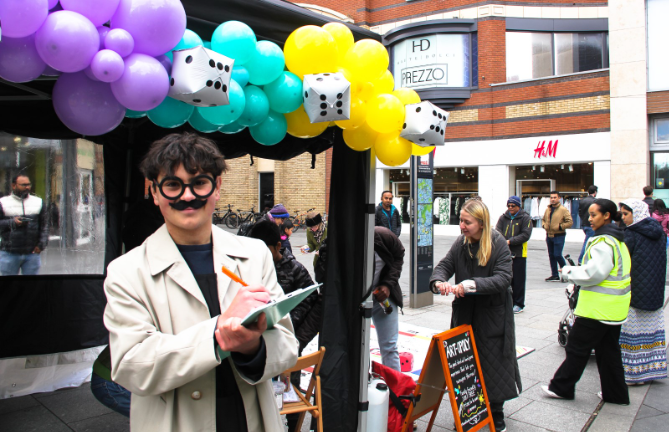
Figure 1: A photo from a boardgame themed outreach event in Harrow (2024)
Over the last four and a half years, there have been hundreds of cases, many events and casual conversations with members of the public, but there are some that stick out more than others.
Navigating complexity
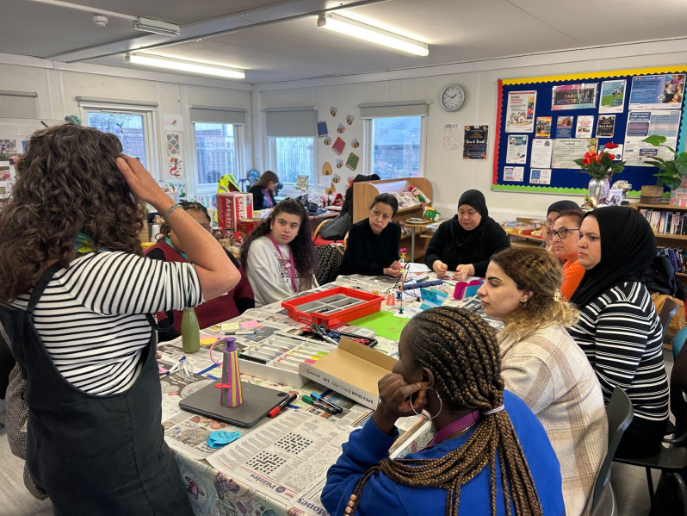
Figure 2: A workshop in Edmonton in relation to the Oxford Street pedestrianisation consultation (2025)
One was the running of a stall at the W12 Wellbeing festival in 2024. It’s no Planning Aid minivan… But with the support of volunteers, I got to speak to people from a range of ages and backgrounds. I heard about what they love about their local area, and witnessed the joy in children’s faces when they spoke about wanting even more slides and play spaces and zoos!
But I also heard about the things that made people feel disconnected and unhappy. These types of events are when Planning Aid for London is at its best, because we give people the chance to feel listened to and to feel bolstered by the knowledge that there is a dedicated service that can help them to navigate the often complex and jargon-filled planning process.
Creative engagement
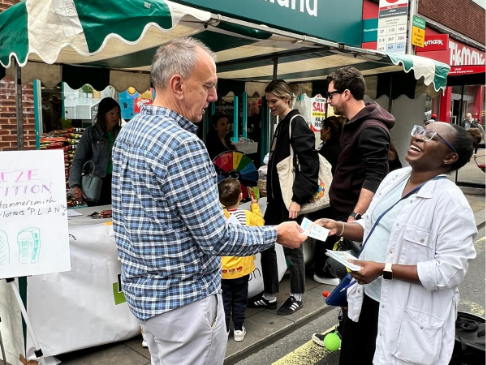
Figure 3: Two volunteers sharing a joke at the Hammersmith Summer Festival (2024)
It has also been great to find new and different ways to connect with people. Shifting towards more of an outreach-first organisation has been difficult, especially when a lot of engagement in planning is now online. But funding from Trust for London meant that they we had the freedom to try different ways to engage. Board games, spinning wheels, stalls at community events, and competitions (can you name the numbers of streets in your borough that don’t include the letters P,L,A or N?) have allowed us to speak to almost 1000 people, in person, about Planning Aid for London’s work. It has helped to establish a deeper understanding of the role that planning plays in people’s everyday lives.
A challenging time for planning
But it doesn’t mean that we haven’t had difficulties…
As planners have left the profession it has been difficult to find volunteers with experience in planning to give advice. A lot of our volunteers have spoken about the relationship with the public and planners being an antagonistic one, which makes it difficult to bridge that gap to offer advice.
At the same time, a lack of clear messaging about planning has allowed conspiracy theories to flourish. A lot of those are about whether planning can respond to challenges such as housing pressures, poor health, access to parks, and climate change. There is also scepticism about whether it is truly possible for the public to make meaningful change after fighting – sometimes for years – to make an area better.
Making positive change
But I am lucky. I have been part of a team at the TCPA and Planning Aid for London, both of which work tirelessly to campaign for the voices of disadvantaged communities; communities who often have integral knowledge about how an area works and how it can be improved.
And at the 50th celebration of the Planning Aid Service, it was wonderful to hear about the experiences of people who care just as much as I do. They have given up their time to support our work and continue to understand the importance of working with communities to make positive changes.
Even though I am leaving, I have no doubt that Planning Aid for London will continue to have an active presence in the communities that need planners’ help and support the most, and support thousands of individuals in the process.