Reflections from day one of the Curious Cities Assembly
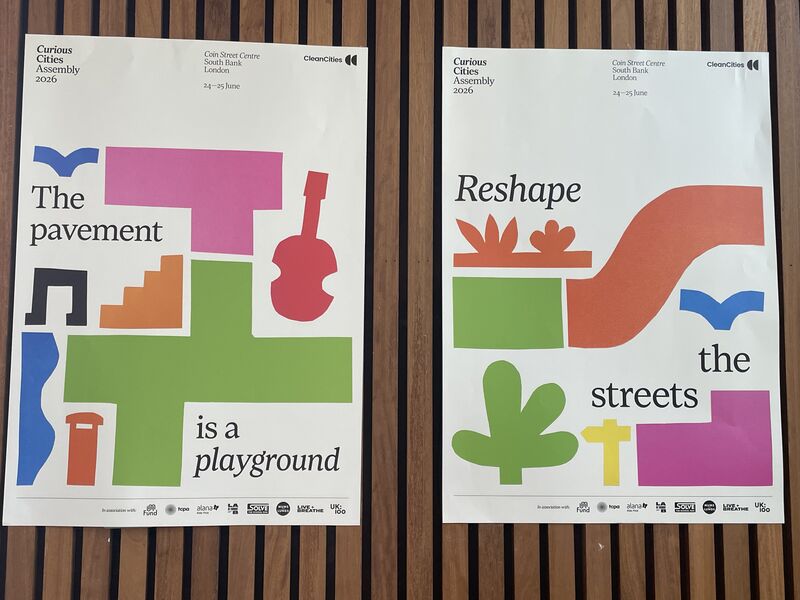
Even a heatwave couldn’t bring down the energy and enthusiasm at the Curious Cities Assembly in London on 24–25 June. The event, hosted by Clean Cities and supported by the TCPA and other partners, brought together a global cohort around a shared vision to put children’s curiosity, freedom and everyday experience much closer to the centre of city planning.
Liberating the city
Lambeth Councillor Ciara Alleyne spoke about the challenges of creating space for children in London – where for lots of young people, play means screens. Many children lack access to gardens, while polluted roads act as barricades rather than spaces for play, with (ever-growing) cars posing a serious threat to safety. A range of measures in the borough are helping to ‘liberate the city’, including a kerbside strategy, traffic filters, and a commitment to creating more school streets.
Play to learn, play for health
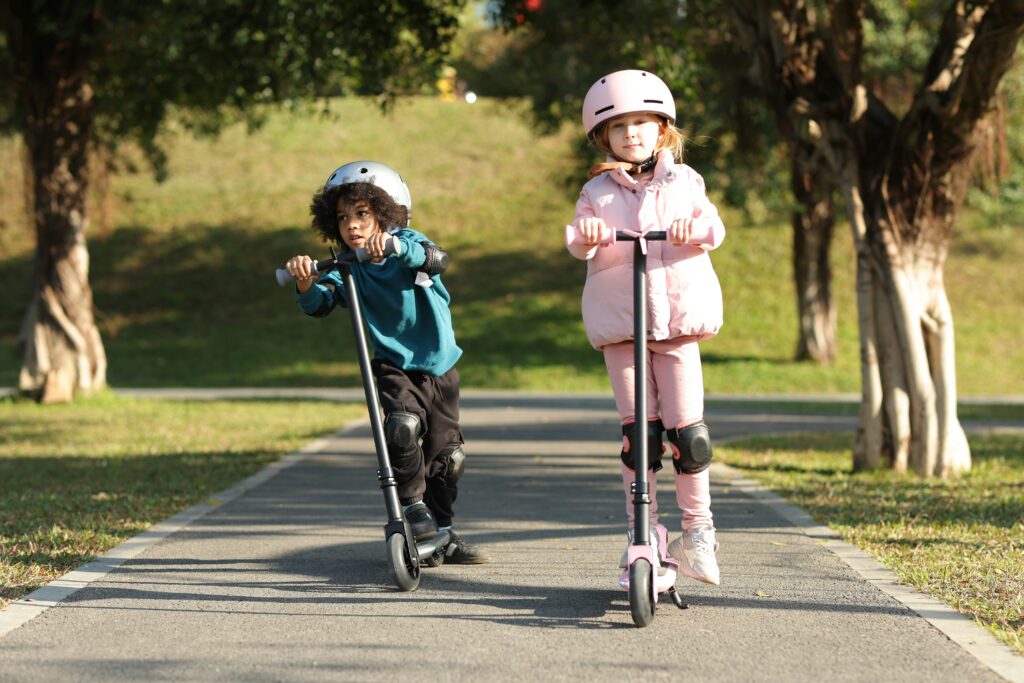
Learning doesn’t just take place in the classroom, explained Nikhil Chaudhary, evolutionary anthropologist at the University of Cambridge. In fact, learning and play are ‘two sides of the same coin’. He highlighted the decline in outdoor exploration and unstructured play, which is hindering children’s socio-emotional development and independence.
Play is also vital for promoting good physical and mental health. Scarlett McNally OBE explained how outdoor play and time in nature is the ‘miracle cure’. But our neighbourhoods and streets can be hostile places, with toxic air and unacceptable numbers of road collisions. The move from car dependency to active travel requires the right infrastructure and an understanding of the different needs people have.
Who is our city for?
Climate change doesn’t impact everyone equally. Deputy Mayor of London for Environment and Energy, Mete Coban MBE highlighted that climate justice is also a racial and economic justice issue. He shared the tragic case of Ella Roberta, a nine-year-old Black Londoner, who was the first person in the world to have air pollution listed as their cause of death.
Ambitious interventions are delivering real change. The Ultra Low Emission Zone (ULEZ), for example, has significantly improved respiratory health; between 2019 and 2024, pollution-related deaths in the city were down by 40%. Research also shows that school children in ULEZ are now four times more likely than peers in Luton to have switched to active travel.
The future of transport can’t just be about new technology, it must be inclusive and centre lived experience, said disability rights campaigner Dr Amit Patel. Our urban environments are currently designed for an imagined ‘average person’. Instead, we should be asking if all people in society can use a space confidently, safely and independently.
Neighbourhoods and the doorstep
The TCPA curated the Assembly’s afternoon sessions, which all took the doorstep as their starting point. The TCPA’s Projects and Policy Manager, Gemma Hyde, argued that if we want to know who a city really works for, one of the best places to look is the doorstep.
Not just the literal threshold of home, but the spaces immediately beyond it: the pavement, kerb, crossing, route to school, walk to the shops, and the bits of street where everyday life happens. These are the spaces where wider systems become real. Where planning policy becomes something you can feel, where transport strategy becomes either freedom or friction, and where questions of safety, access, care and public life are negotiated in practice.
As Gemma Hyde put it, the doorstep is a sharp test of our priorities. It is where the built environment reveals what matters most, what gets protected, what gets squeezed, and who is expected to absorb the friction. A place can say it supports children’s independence, values health or wants public life, but the spaces just beyond home often tell a more complicated story.
Difficult conversations
A panel discussion pondered who shapes the doorstep and unpicked why better outcomes are difficult to deliver. Christopher Martin from Urban Movement spoke about the damaging assumptions quietly embedded in systems and standards of road design, where movement by car is wrongly regarded as the default.
So, how can we create streets that feel right for people, not cars? Lucy Saunders introduced the Healthy Streets assessment tool, which sets out ten indicators for judging whether streets meet basic human needs. Importantly, health is front and centre, and not just an add-on.
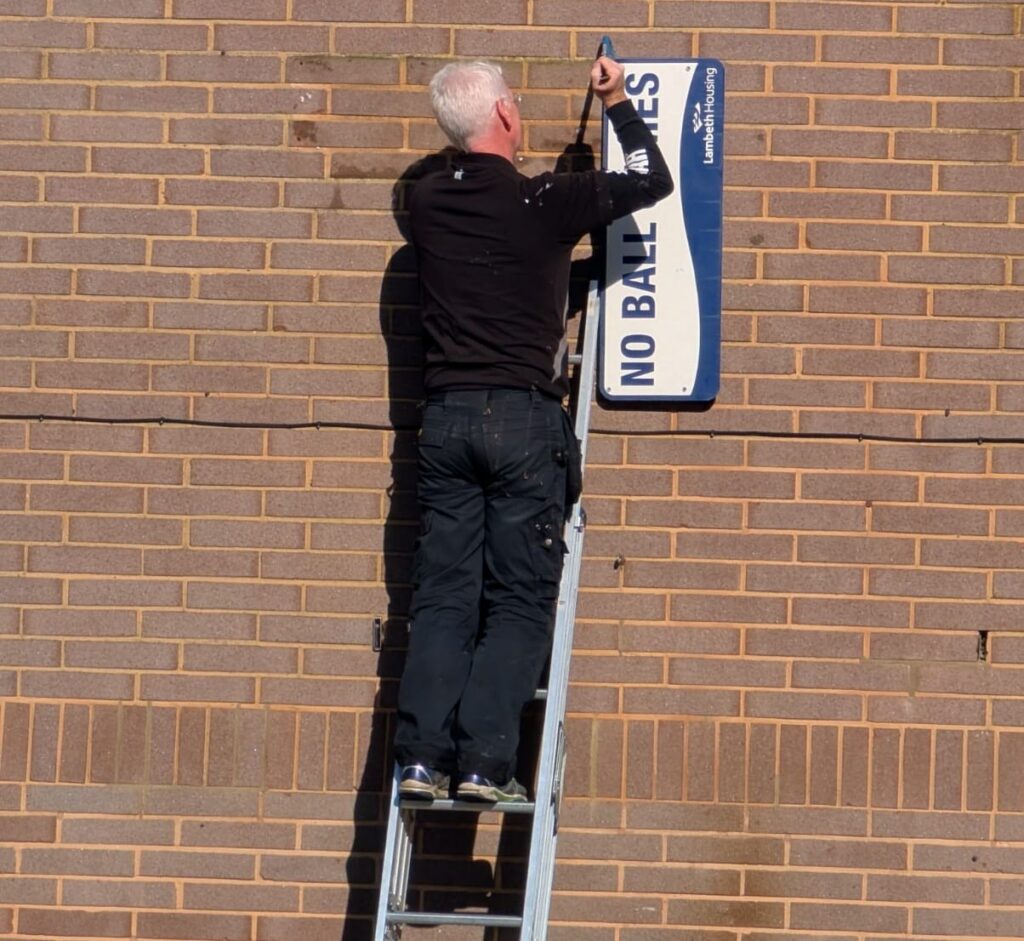
‘No ball games’ may be a familiar sight for many of us, but what about the right to play, freedom and movement? Jasmine Hoffman from Yes Ball Games shared a personal account of how the communal grassy areas of her housing estate had been transformed into a battleground. The housing association had suddenly, and without consultation, put up ‘no ball games’ signs in response to resident complaints about children playing football. This is a familiar dynamic, where the rights of adults in the built environment are prioritised over those of children and young people. Hoffman called for a written play policy to protect doorstep play and greater stewardship efforts.
While, in Hoffman’s case, the local community had eventually come to appreciate children’s right to play, not all conversations about doorstep access are so harmonious. Several audience members shared the difficulties and opposition they had faced when advocating for greener, safer streets in their communities. Panellists noted the need to frame issues carefully so that polarised views do not become entrenched. One effective way of winning people over can be to take them out to the street and help them see it from a pedestrian’s perspective. Not everyone will be won over, however. As active travel advocate Rezina Chowdhury noted, ‘The task is not to persuade a reluctant public. It is to give voice to one that is already ready.’
Shifting power: young people shape their place
Children and young people are largely disenfranchised from conversations about the built environment. But in recent years, developers – both local authorities and the private sector – have begun to involve children and young people more directly in shaping urban change.
Panellist Dinah Bornat of ZCD Architects, emphasised the importance of taking the right approach when including young voices. This means swapping formal minute-taking for creative, imaginative conversations rooted in lived experience. It also requires honesty about the options that are available and accepting that children and young people may want to use space in ways that feel uncomfortable for adults. As with any consultation process, there needs to be discussion about what is kept and what is let go of – a car park, a rose garden, a piece of managed space – in order to meet different needs. Serious consideration must also be given to how young people are involved in the stewardship of a neighbourhood over time.
Freedom for everyone
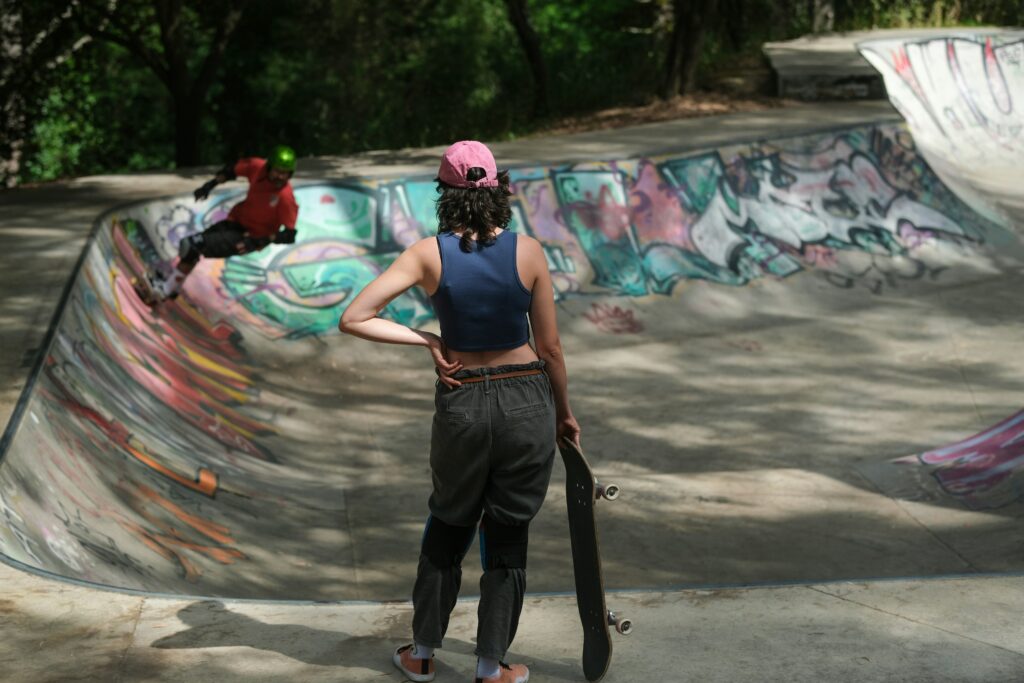
At the end of day one, Rezina Chowdhury, active travel advocate and previous Deputy Leader of Lambeth, shared a passionate call to action.
‘What we are really arguing for, and what this whole conference is about, is a rebalancing. A recognition that freedom in a dense, shared, urban space is not the absence of constraint; it is the fair distribution of possibility. And right now, that distribution is grotesquely unequal.
We plant the word “freedom” back in the centre of this argument, and we mean it. We just mean it for everyone.’
That idea ran through the whole of day one. What is good for children – freedom to move, to play, to breathe clean air, to feel safe, to belong in the spaces around home – is, in the end, good for all of us.