Research by UCL Bartlett School of Planning has found nearly half of residents in deregulated Permitted Development housing conversions report overheating in the summer.
The heatwave in large parts of the UK over the last few days has been a stark reminder of the growing challenge of keeping our homes cool. For those people living in flats converted from former office blocks and industrial buildings this challenge is even greater. UCL Bartlett School of Planning, in partnership with the TCPA, has been reviewing the health impacts of living in such buildings, converted through Permitted Development (PD) deregulation – which is when buildings are changed to residential use without the need for full planning scrutiny.
PD residents left to suffer in overheated flats
The team at UCL surveyed and interviewed over 1,000 residents living in PD housing in England (total sample – 1029 residents). Nearly half of those surveyed (45.6%) – across all tenure groups – have described experiencing problems with overheating. They also talked about a whole range of other problems, like street noise, outdoor air pollution, and security concerns, which prevented them from opening windows to support better ventilation:
‘..when it is hot or humid we can’t physically breathe on our floor, we all have to have all the fire escapes open, which is illegal for a start.’ PD resident
‘You can’t open the windows because of security issues; therefore, there’s no air in here. It’s a Catch 22.’ PD resident
Mothers also described having to find places to stay out with their children all day as it was too unbearable to be in the flats. Shockingly, over half the residents surveyed (58.9%, 606 out of 1029 people) also said they lacked any access to an outdoor green space – vital to provide urban cooling and natural shade. PD housing tends to be concentrated in urban areas, particularly in London and the South East, but also in cities around England.
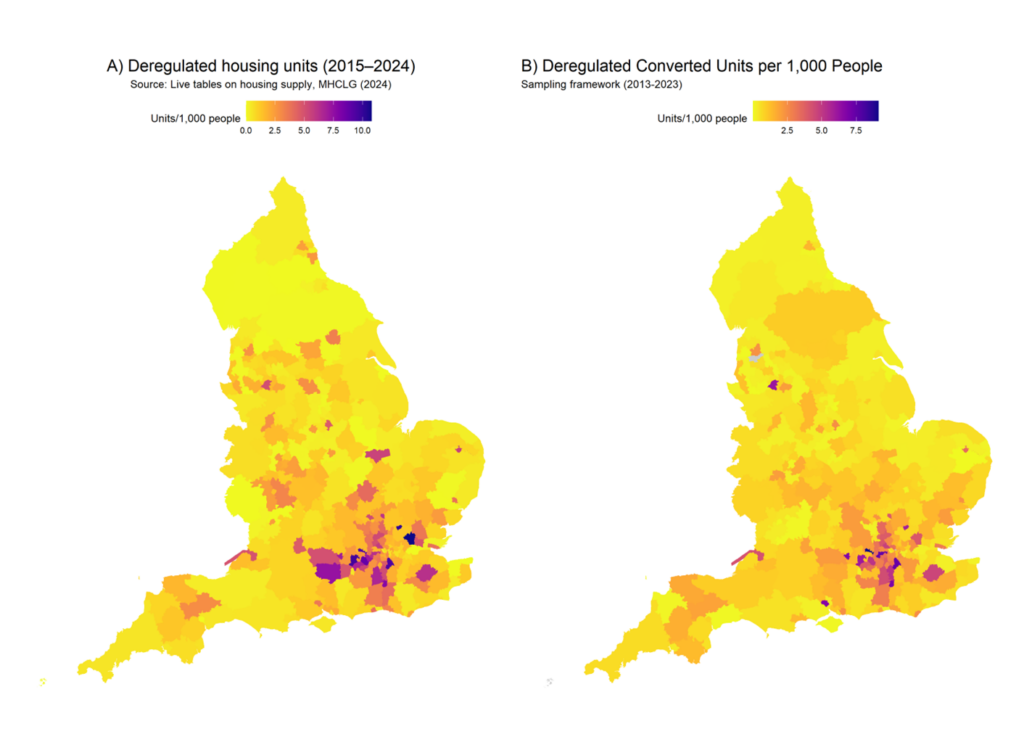
PD hotspots in England (source: UCL Health Impacts of Converted Housing project)
The impact on health
Overheated homes is a huge concern in relation to people’s physical and mental health. The UK Climate Change Committee has estimated that 92 per cent of UK homes will be at risk of overheating by 2050 without adaptation measures.
Overheating is known to be especially problematic for people with hypertension, especially older people and for those of Black and Global Majority backgrounds. But even younger people can suffer from heat stroke. The body’s response to heat includes vasodilation, which drops blood pressure, increases sweating and results in dehydration. Such physiological changes can exacerbate hypertension and increase the risk of cardiac issues, like heart failure and stroke (Chaseling et al, 2025). Overheating at night time can also result in sleep loss, impacting people’s mental and physical health.
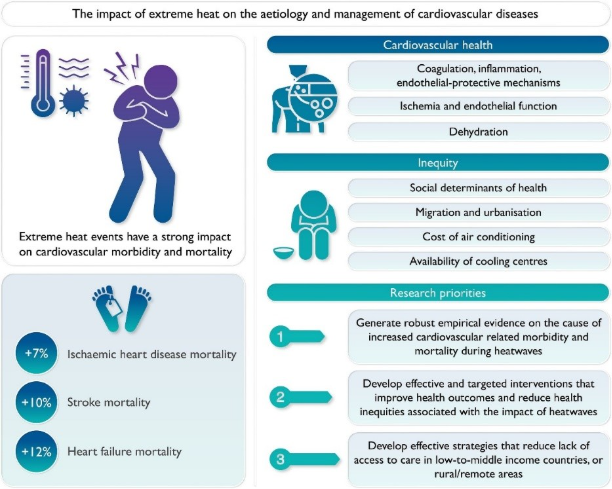
The impact of heat on the heart (Source: Chaseling et al, 2025)
We can do better
Based on this evidence and current climate trends, you might expect all new homes and neighbourhoods to be designed to manage the growing extremes of summer heatwaves as well as cold winters, and doing so in an energy efficient way. Indeed, we have seen it is perfectly possible to do so – with great examples of affordable housing schemes built to a high standard from the Healthy Homes campaign – homes which ensure year-round thermal comfort by applying Passivhaus design principles, Air Source Heat Pumps, and providing access to cooling green spaces.
You might also expect those principles to apply to ‘new’ homes being produced through Permitted Development conversion. It is therefore deeply worrying that, despite the TCPA’s recommendation, the Future Homes Standard announced earlier this year says absolutely nothing about requiring newly converted flats or dwellings to address overheating. The standard has introduced no requirements for such conversions to meet minimum requirements on Building Regulations Part O on Overheating – despite 88% of respondents to the government consultation saying it should (see ch.14).

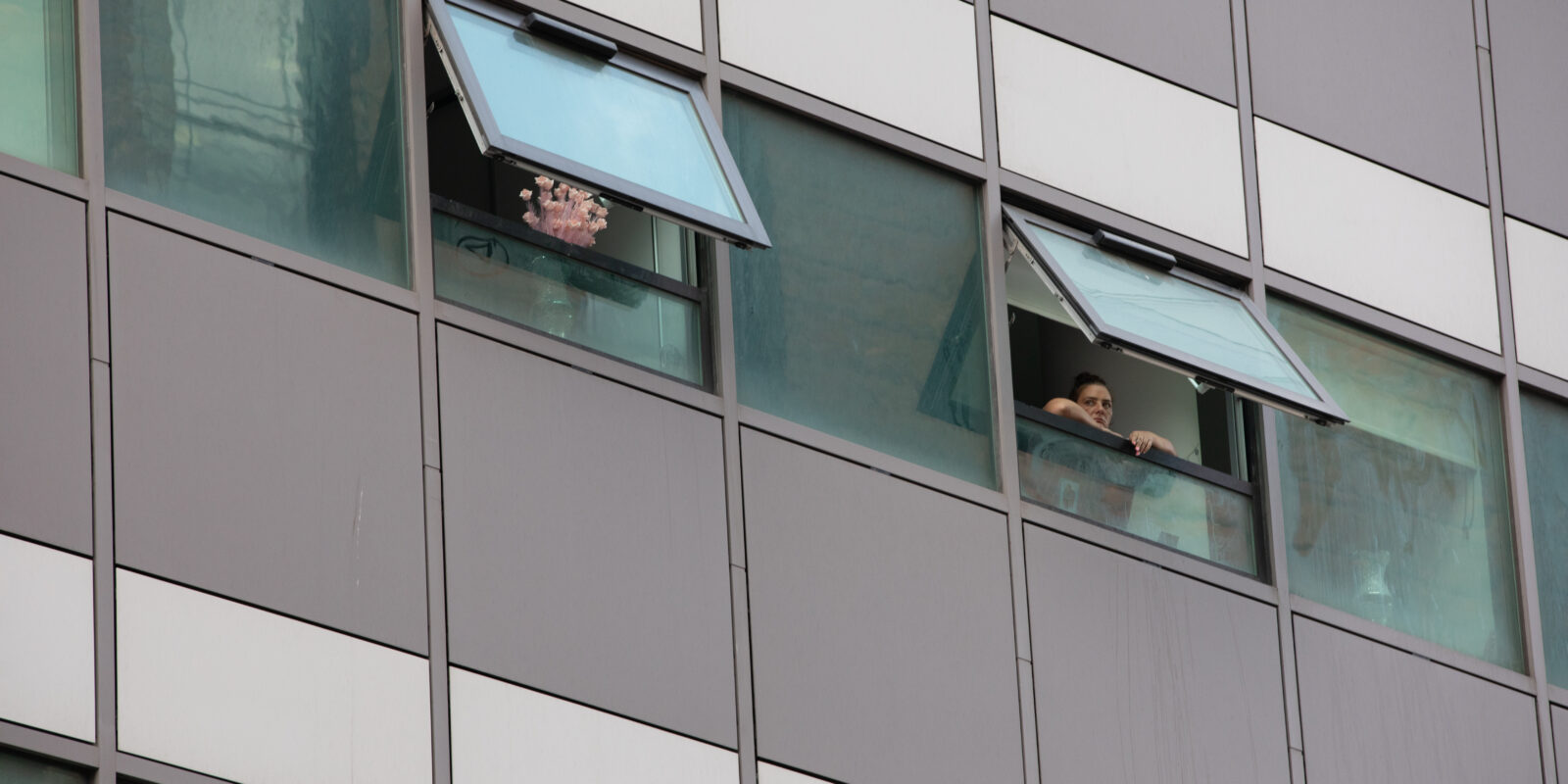
Former office blocks, like Delta House in Croydon (above), expose residents to excessive summer heat
Of course, individuals can try to reduce their personal overheating risk, including staying hydrated, avoiding excessive alcohol consumption, using fans, and finding cooler spaces. But if the flats are so poorly designed from the outset, these personal actions will be of limited benefit. All too often this is the case for people living in PD housing, where residents are dependent on their landlords or building managers to retrospectively adopt measures to attempt to cool ageing buildings.
UCL and the TCPA will be reporting further on this issue and the wider health impacts of homes produced via PD later this autumn. At a minimum, the Government should revise the Part O Overheating requirements to ensure these rules apply to all residential conversions or ‘Material Change of Use’ – so that new homes produced by this route are built to a high standard that will provide thermal comfort to residents all year round. Furthermore, the government should consider ways to ensure that building managers and landlords take action where necessary to improve temperatures for residents in over 119,000 PD conversions that already exist.
Resources:
- Alarcon-Yaquetto, D.E., Pineo, H., Sufineyestani, M., Clifford, B., Aldridge, R.W. (2026) Population and Characteristics of Deregulated Non-Residential Conversions: A Cross-Sectional Survey in England. Preprint:https://dx.doi.org/10.2139/ssrn.6571137
Contacts:
TCPA: Rosalie Callway Rosalie.Callway@TCPA.org.uk
UCL: Nadia Elsay n.elsay@ucl.ac.uk