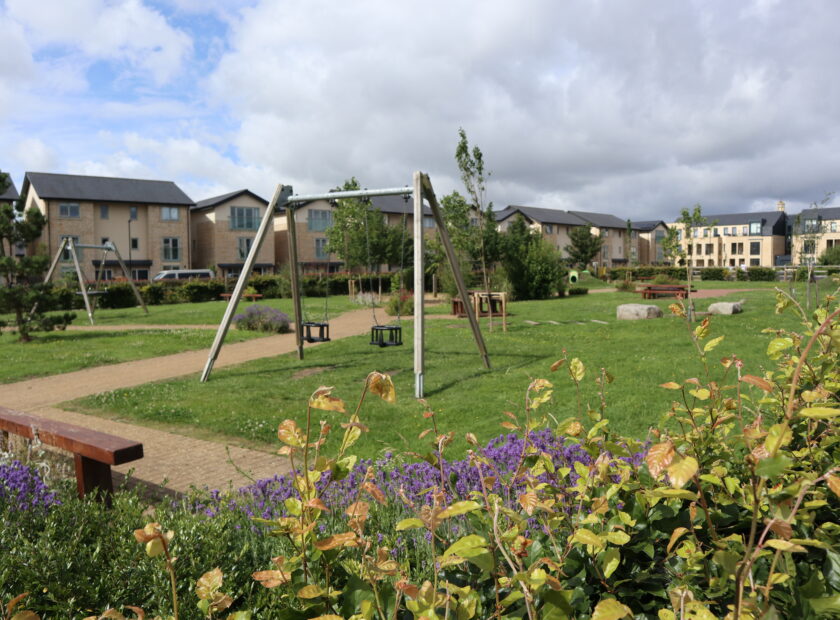
Following the inaugural National Play Conference organised by Play England and SAPCA, Gemma Hyde reflects on how play sufficiency – which asks whether children have the time, space and freedom to play rather than simply enough play space – can help planning think more broadly about the conditions children need to live, move, play and grow well.
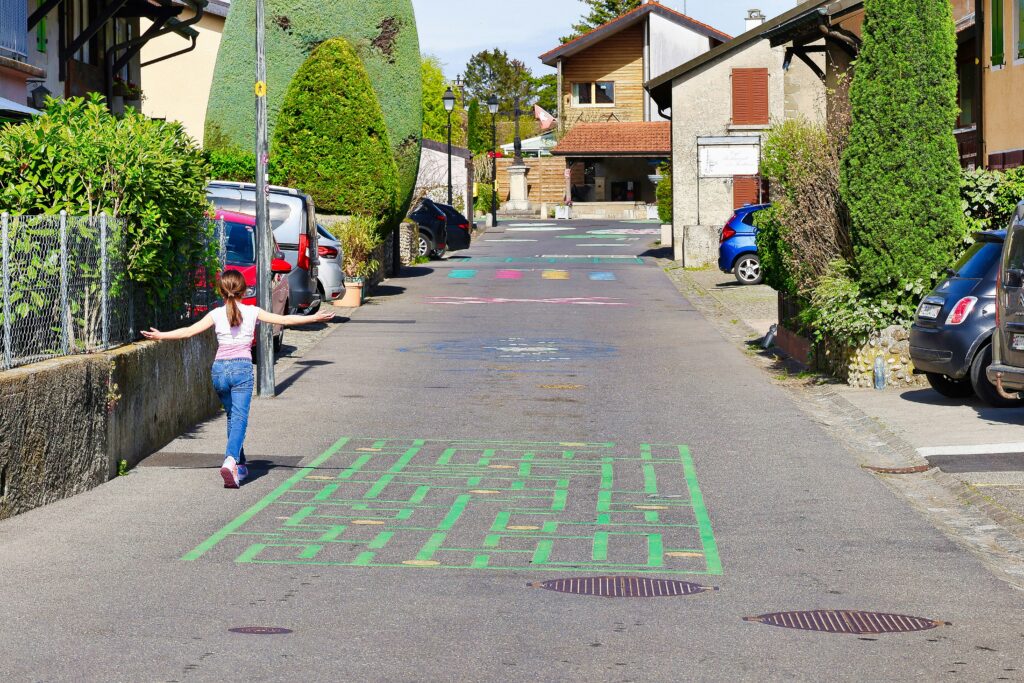
Play happens where childhood happens
Play is about love, laughter and spending time with people that make your life brighter.
Eight-year-old Anna-Sophia’s words captured something at the heart of the National Play Conference in Warwick: play depends not just on playgrounds, but on relationships, freedom, belonging and the places children use every day.
That is where planning comes in.
Childhood happens at home, outside the front door, on streets, on the journey to school, in parks and green spaces, and across the neighbourhoods children gradually learn to navigate for themselves.
Planning shapes all of those places, and in doing so, shapes childhoods.
From provision to sufficiency
Planning has often approached play through a lens of provision. A development creates a certain number of homes, so a certain amount of play space is required.
Standards matter. Good-quality dedicated play provision matters. But neither necessarily tells us whether children are actually able to play.
A neighbourhood can meet its play-space standard while children cannot safely cross the road to reach it, have nowhere to play outside their homes, or cannot travel independently to open spaces or friends’ houses.
That is what makes play sufficiency and the wider idea of enabling play so useful.
It shifts the question from ‘have we provided enough play space?’ to ‘do children have sufficient opportunities to play?’
And that quickly brings streets, movement, traffic, green space, public realm, inclusion, independent mobility and children’s own experiences into the picture.
Planning for childhood
That also raises a bigger question for planning: Is a place sufficient for childhood?
Children do not experience housing, transport, green infrastructure, play and public space as separate policy areas. They experience a place.
Creating places that work well for childhood needs a whole-society effort, one that takes children’s rights seriously and removes design choices and barriers that prevent children feeling they belong in the places around them.
That thinking sits at the heart of the Town and Country Planning Association’s Children and young people in Local Plans in England resources, which help local authorities embed children’s rights, needs and voices across the whole Local Plan, not simply in policies on play.
There is a strong connection too with the TCPA’s Garden City Principles, which bring forward an interlocking framework for creating healthy, sociable places. Those same ingredients matter enormously to children’s everyday lives.
The same is true of our Campaign for Healthy Homes. A healthy home is about more than the building itself. It depends on what sits beyond the front door: green space, everyday services, sustainable transport, social connection and the freedom to move around.
Starting with children’s real lives
Play sufficiency gives planning a useful way of thinking. Start with children’s real lives, not simply with the amount of provision shown on a plan.
The opportunity is to connect that understanding to policy, strategy and investment and to ask, across all the things planning deals with: What kind of childhood does a place makes possible?
Resources for child-friendly places
Along with partners in the built environment sector, we are working to reclaim space for children and young people.