The TCPA’s Jeanette Aves reflects on key lessons from the 2026 New Communities Group Study Tour visit to Bath. The TCPA’s New Communities Group offers a regular programme of training and events for ambitious local authorities delivering strategic sites. You can find out more and join here: TCPA New Communities Group.
The quality of a new housing development is often influenced as much by how land is valued at the time of purchase as it is by the planning application that follows. Yet discussions about place-making rarely begin at land disposal. In Ensleigh and Mulberry Park, we saw how detailed development briefs could inform land sales, leading to improved development quality.
While planning frameworks for strategic sites are often set out after a site has been acquired for development, Bath & North East Somerset Council (BaNES) took a different approach for three former Ministry of Defence (MoD) sites. Because the sites were being disposed of from public ownership, BaNES had a rare opportunity to shape expectations before land values were established rather than simply responding to a planning application, allowing them to prioritise long-term place quality. This was done by producing Concept Statements before the land sales took place, embedding placemaking and quality expectations in the land bids. The resulting developments at Ensleigh and Mulberry Park (formerly known as Foxhill) demonstrate how a positive vision, setting quality expectations early, can help secure better design, more community facilities, and affordable and social housing beyond policy compliance.
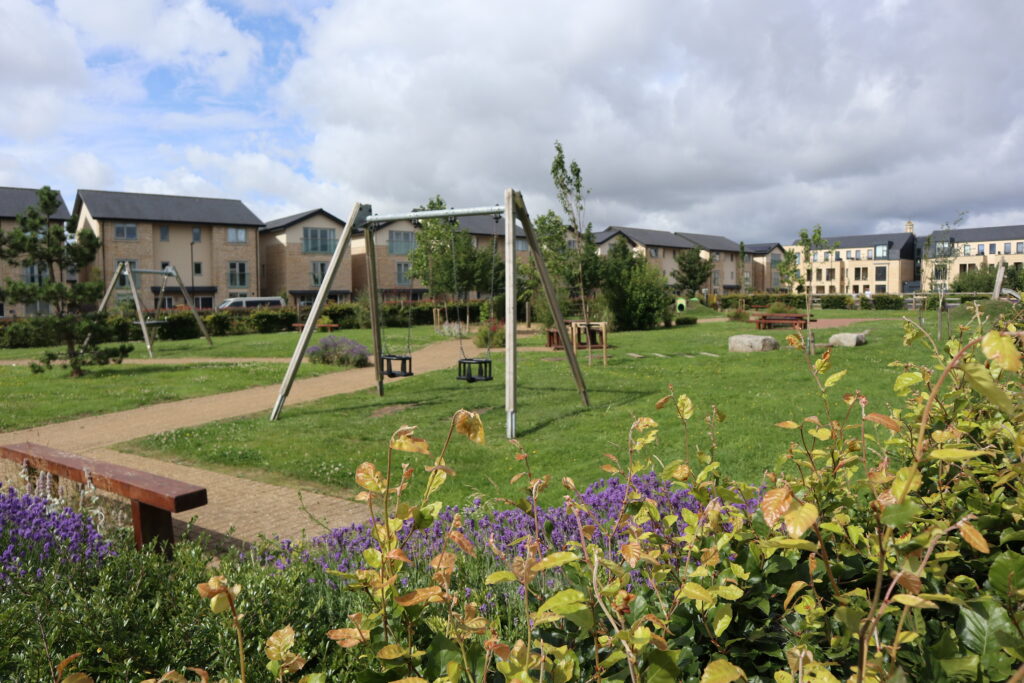
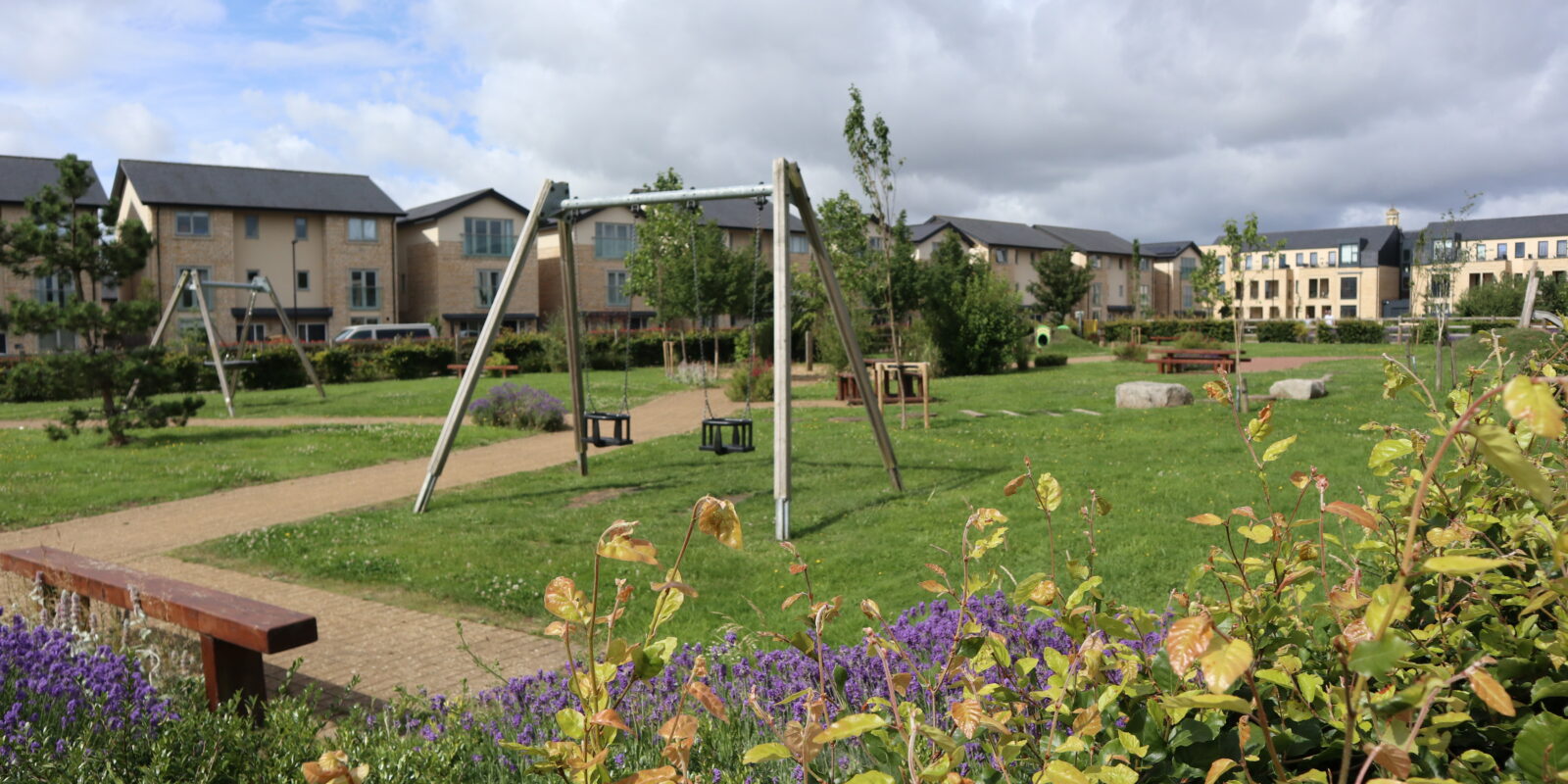
Hopton Way Green, the central green avenue in Ensleigh
Clarifying strategic expectations with Concept Statements
The significance of the Concept Statements lay not in their statutory weight but in their timing. By establishing expectations before developers bid for the land, quality became part of the site’s value rather than a cost to be negotiated away later. To develop the statements, BaNES worked in partnership with the MoD, ATLAS and the Homes and Communities Agency. They summarised an analysis of the sites and set out key design principles underpinning the council’s vision. The Concept Statements also detailed expected housing densities, to optimise capacity in line with BaNES’s Core Strategy – which recognised the sites as critical to meeting the city’s housing needs. While non statutory, the Concept Statements were material considerations in negotiations and planning application determinations.
High affordable and social housing provision
A major benefit of the Concept Statements were the early cost analyses of delivering affordable and social housing. This helped achieve ambitious levels at both sites. At Ensleigh, 40% of homes delivered were affordable, with 30% of these for social rent. These were transferred to a range of registered providers. In Mulberry Park, 30% of homes will be affordable, with 75% of these for social rent, and 25% as shared ownership. These will be managed by Curo Places, Curo’s housing management arm.
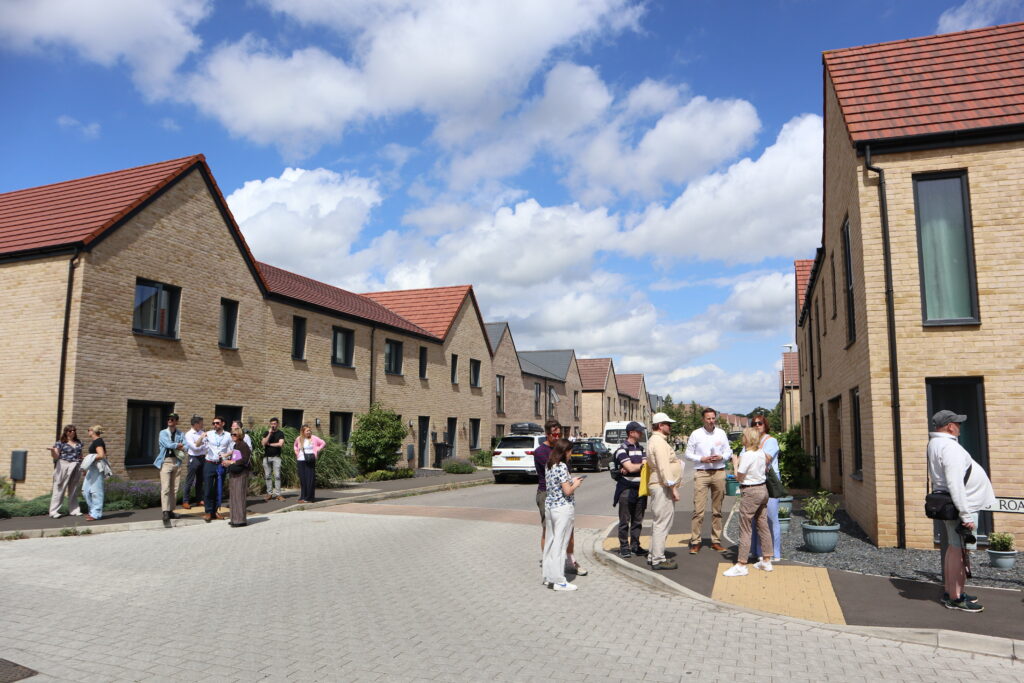
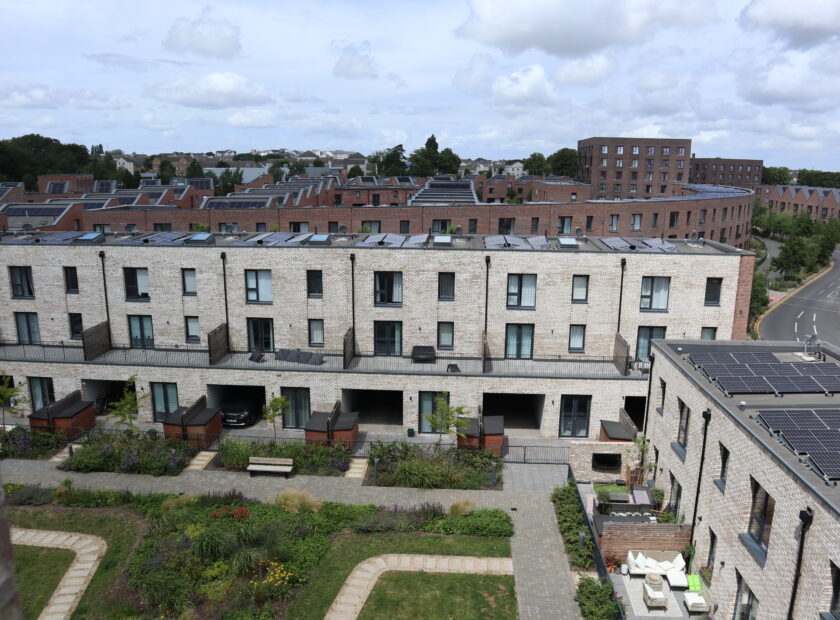
Housing in Mulberry Park
Delivering public facilities beyond planning requirements
By having a long term investment in the site, Curo was able to outbid other buyers and still offer public spaces and affordable housing numbers beyond minimum planning requirements. This led to 800sqm of community space when only 100sqm was required. The Curo team explained that they saw the site’s development as an opportunity to offer greater local facilities for existing homes they managed in the neighbouring Foxhill estate. As a result, the masterplan pays close attention to linking the two sites. Facilities were also co-located: the community hub, cafe, school nursery, park and local shop all centre around a main square. And the success of these facilities was seen in how busy they were, despite not all homes being delivered yet. As the end of the school day approached during our visit, families stayed and gathered at the cafe and square.
Ensleigh demonstrated a similar commitment to social infrastructure, with generous green corridors and play spaces, a local shop, supported housing for older people and a primary school that has since adapted to meet local SEND provision. The Concept Statement allowed these facilities to be viewed as integral components of the neighbourhood, rather than additions.
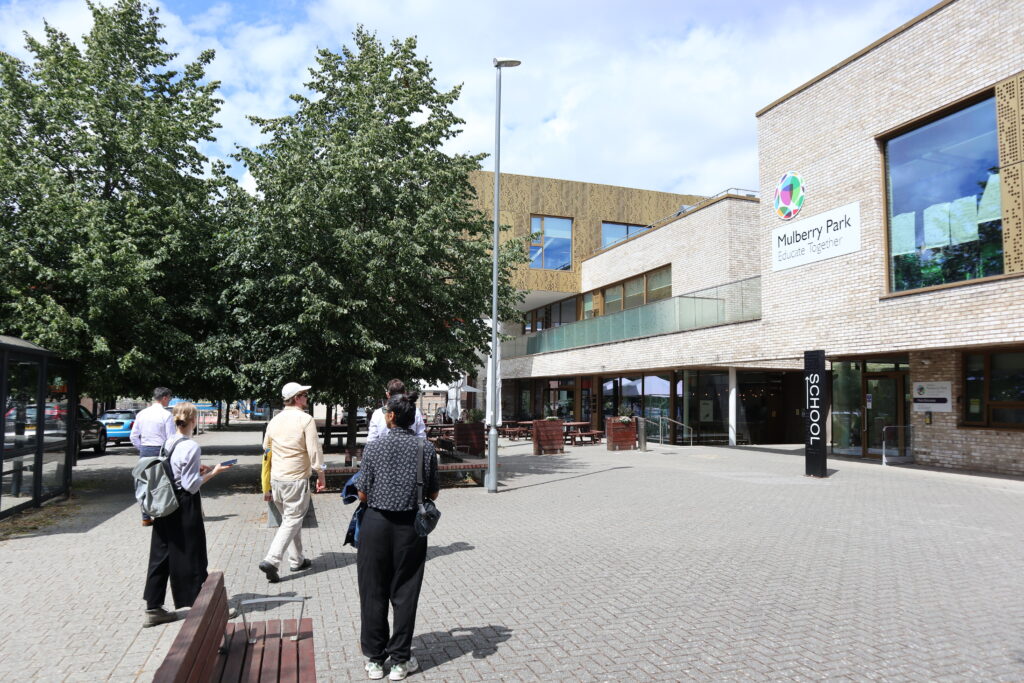
The public square at Mulberry Park
Ownership matters
While many local authorities prepare planning guidance for strategic sites outside of their local plan process, BaNES’s decision to develop proactive Concept Statements before the land was marketed demonstrates the value of establishing clear expectations before land values are fixed. In order to raise standards of affordability, design and facility provision in new developments, expectations need to be established before land is sold. This is especially critical on larger sites where timely facilities often fall short due to viability challenges midway through development.
While the disposal of most development sites take place outside a local authority’s control, and therefore prior to establishing site specific planning frameworks, these case studies emphasise the need to establish high standards early in the development process. If government is serious about delivering a new generation of well-designed strategic developments, local authorities need greater opportunities to influence how land is assembled and brought forward. Greater transparency around options agreements could help by giving councils earlier visibility of land interests and development intentions, enabling them to engage before key assumptions about land value and development potential become fixed.
Data in this blog is from the study visit of Ensleigh hosted by Bath & North East Somerset Council (BaNES), and the panel discussion about Mulberry Park with representatives from Curo, BaNES, HTA Design and tor&co. Local authority officers can find out more and join the TCPA’s New Communities Group here.
Jeanette is Osborn Research Assistant at the TCPA.