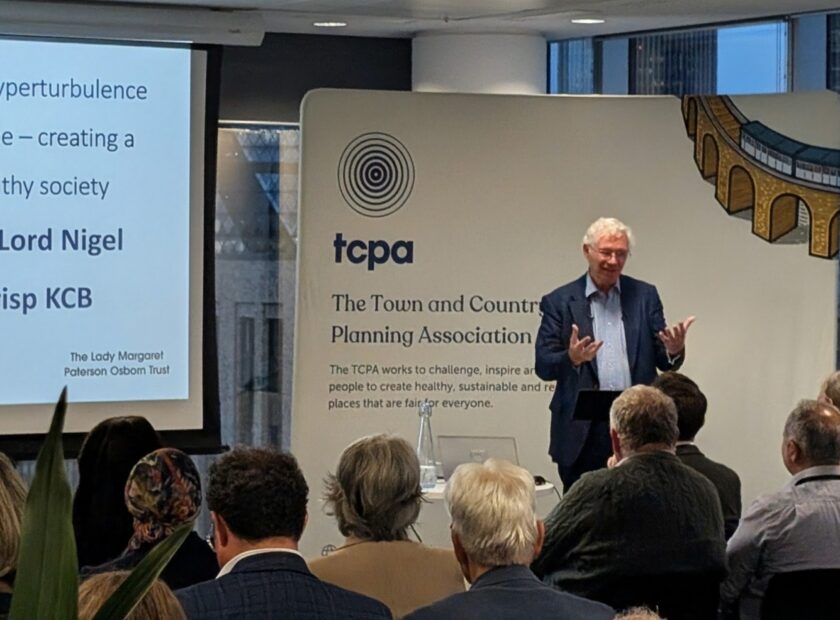
The TCPA’s Jeanette Aves reflects on learnings from a study visit to Bracknell. The visit was hosted by Peter Swallow MP, as evidence towards the All-Party Parliamentary Group on New Towns’ Mini-inquiry into new town renewal. The Mini-inquiry will be launched on 17 November.
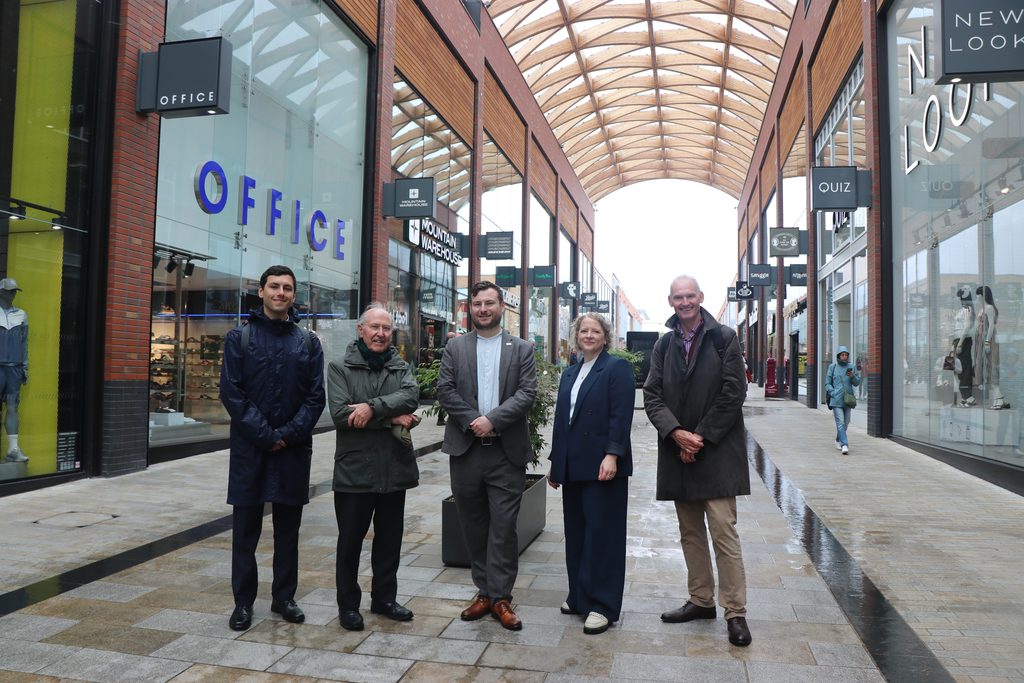
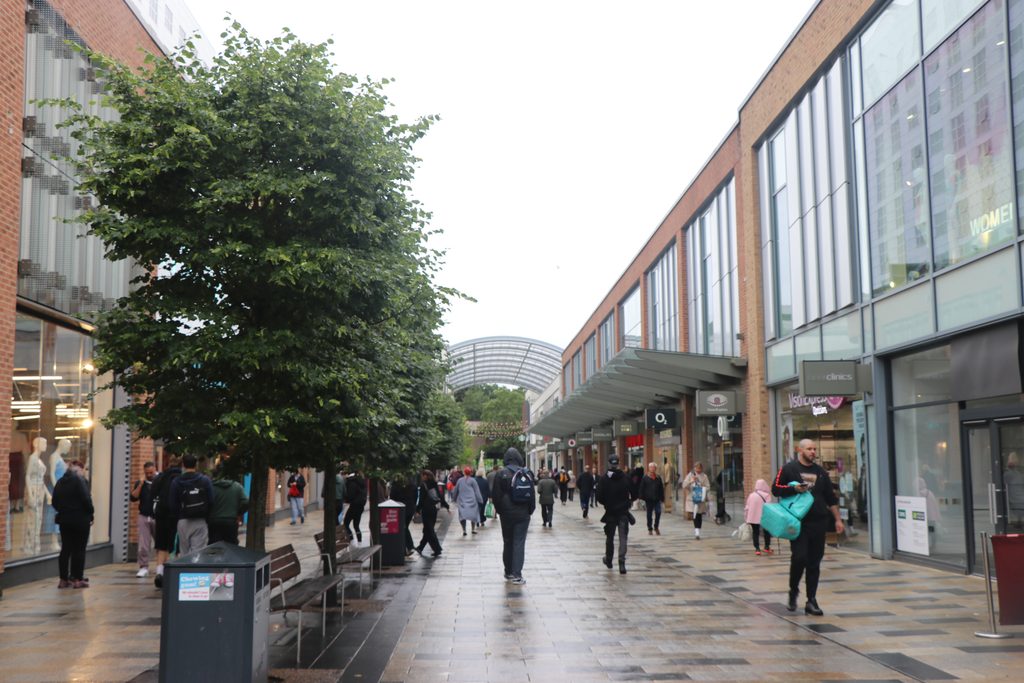
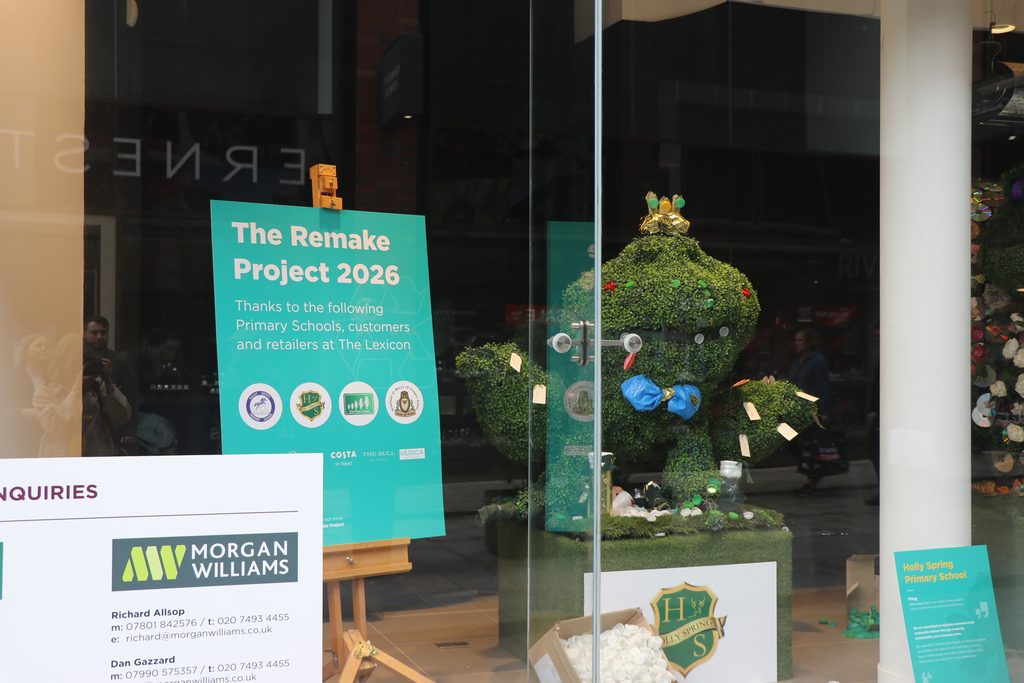
It didn’t take long to see why Bracknell is regarded as one of the UK’s regeneration success stories. Rather than empty shopfronts and quiet streets, the town centre was busy despite the enduring rain: with shoppers, schoolchildren’s art brightening shop windows, and community meetups in local cafes. The redeveloped centre appeared to enjoy strong local support and a clear sense of civic pride.
As many towns across the country grapple with declining high streets, Bracknell offers valuable lessons in how thoughtful regeneration can reverse that trend.
A long-term vision
Bracknell’s regeneration has been phased over a long period. The first phase was completed in 2011, introducing a new Waitrose store to accompany the company’s headquarters in the town.
The much larger second phase followed in 2017 with the opening of The Lexicon, a £240 million retail and leisure destination that has fundamentally reshaped the town centre. Plans are now being developed for a third phase, including a new civic quarter, market square and a southern gateway to the town centre.
The project reflects a strong partnership between Bracknell Forest Council and the town centre’s previous owners, who worked together over more than two decades through the Bracknell Regeneration Partnership. Its success shows the importance of sustained, long-term collaboration in large-scale regeneration.
More than just shopping
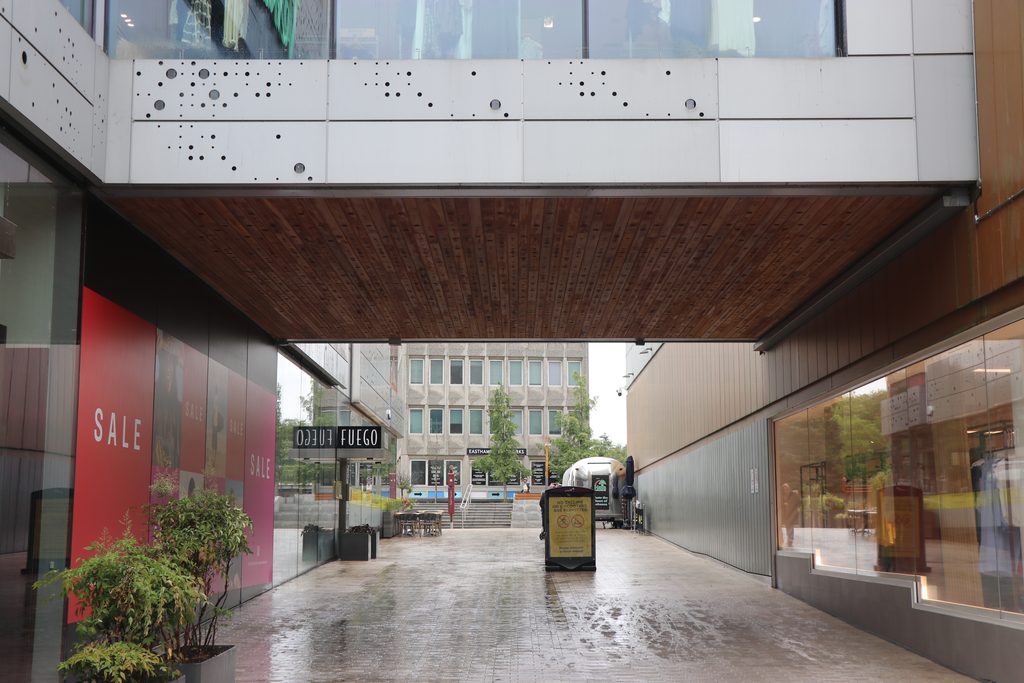
The Lexicon is home to around 70 shops, cafés and restaurants, a hotel and a large cinema. There is a focus on a variety of retail types, to bring in broad audiences to share the space.
But the redevelopment also created a network of busy public squares. Since opening, The Lexicon has maintained a busy programme of activities, from twice-weekly markets to larger events such as Bracknell Pride.
Its current owners, Realty Income, also provide grants and free space for local charities, for the centre to be a community destination alongside a place to shop. By creating a space with a mix of commercial and civic activities, The Lexicon is able to draw people in for a variety of reasons and to create a genuinely public space.
Creating new spaces for the community in old buildings
One of the most interesting aspects of the visit was seeing how regeneration has extended beyond retail.
Alongside The Lexicon, several council-owned 1960s and 1970s buildings have found new life as community facilities. These include Bracknell Library, the former courthouse, now home to community organisations and volunteer groups, and Easthampstead Works. These facilities benefit from a central, accessible location and strong connections to the wider town centre. Challenges were highlighted however, between the shopping centre and local authority, regarding management and uses of public realm areas.
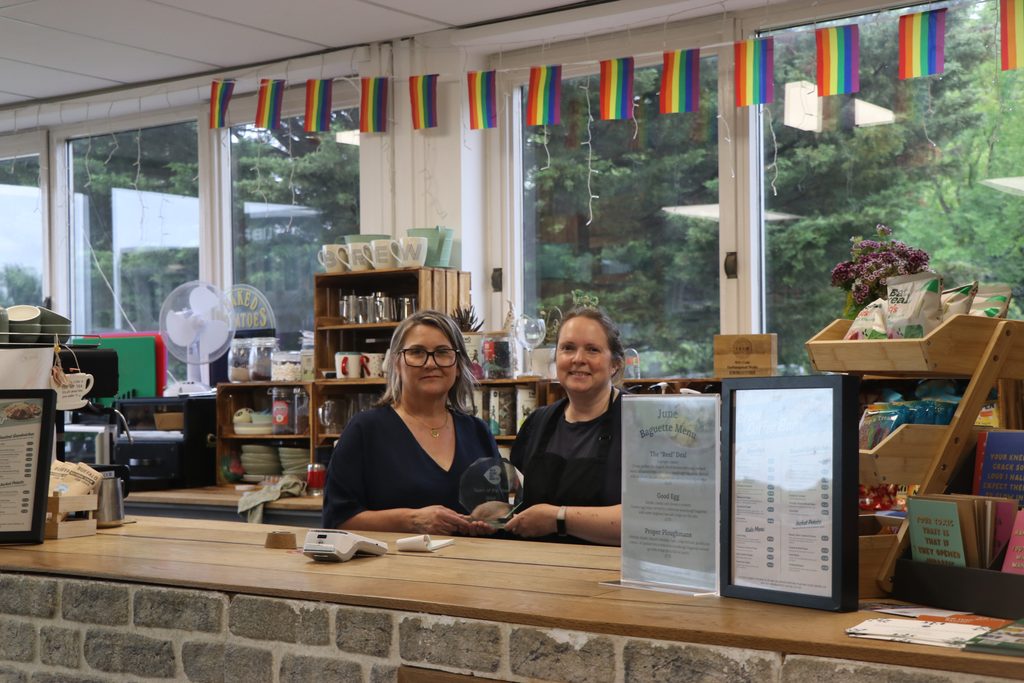
Opened in 2019, Easthampstead Works combines coworking space, artists’ studios, meeting rooms, event space and an independent café. And it remains well used throughout the week.
The café itself acts as an important community hub, hosting Chatty Café sessions, parent support groups, craft workshops, book evenings and SEND support events. It demonstrates how relatively modest investment in existing buildings can create spaces that strengthen both the local economy and community life.
Celebrating local identity
Successful regeneration should not erase a town’s history.
Bracknell has incorporated local artwork into shopfront displays and public spaces, with schools and community groups contributing to exhibitions throughout the town centre. Plant motifs set into the paving also celebrate the town’s surrounding green spaces.
During redevelopment, a number of historic public artworks were removed. While some, such as William Mitchell’s striking frieze, have since been reinstated, many other pieces remain in storage. Greater emphasis on restoring these artworks would help preserve Bracknell’s distinctive identity as a post-war new town.
At the same time, new public art is being added. One colourful mural, designed by a Bracknell and Wokingham College student, has helped transform a central underpass into a more welcoming public space.
Lessons for other towns
Bracknell’s experience suggests that successful regeneration depends on much more than upgraded retail spaces.
Strong partnerships between councils and landowners have helped provide the stability needed for long-term investment in Bracknell, while a mix of shopping, leisure, cultural and community uses gives people reasons to visit throughout the day and evening.
The town has also shown the value of providing affordable space for local organisations, start-up businesses and creative industries alongside commercial development. This has helped to build a resilient local economy and bring existing buildings back into active use. Meanwhile, efforts to celebrate local heritage and support public art demonstrate how regeneration can strengthen, rather than replace, a town’s identity.
Above all, Bracknell shows that town centres can recover. With a clear vision, sustained investment and genuine partnership working, regeneration can create places that residents are proud of.
The APPG Mini-inquiry will be launched on the 17 November and we look forward to sharing further insights on this subject with you soon. If you have any questions in the meantime about the inquiry or APPG, please contact jeanette.aves@tcpa.org.uk