As climate risks, health inequalities and pressures on housing grow, director of policy at the TCPA Hugh Ellis outlines why planning has never mattered more, ahead of our annual conference.
Town planning has taken one a hell of a beating over the last 30 years.
Based on a highly effective propaganda campaign from think tanks and lobbyists in the YIMBY movement, a powerful mythology has arisen in which planning and planners are nothing more than traffic wardens for land. An economic blocker on the one hand, and an annoyance to the public on the other.
This of course is not the TCPA’s utopian vision for the kind of town planning which modern life demands. Nor does it have much to do with the origins of town planning, rooted in the belief that we can create places which improve people’s lives.
Of course, planning has been easy to blame. The benefits of what we do often play out in the medium and long term. And planners have been particularly poor at vigorously defending themselves. But like all ideological assaults on democratic regulation, there reaches a point where the impacts on people and communities begin to show.
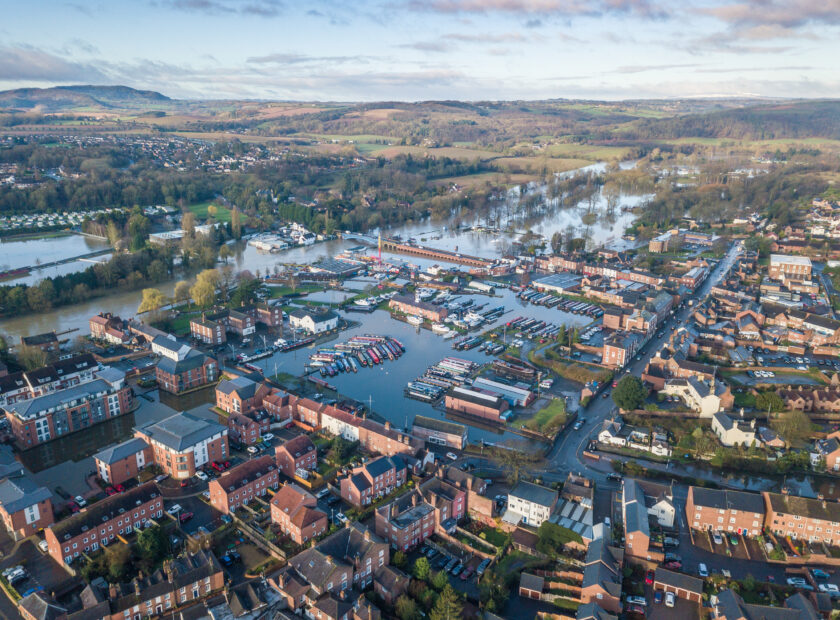
Sometimes that appears in the most horrific way possible, such as at Grenfell tower. But it’s also becoming evident in the way that planning system no longer protects people from flood risk or can deal effectively with overheating because it no longer has the power and the reach to drive change.
It is no exaggeration to say that if we get planning outcomes wrong, we will cost lives both now in relation to climate impacts, and in the future in terms of shortened life expectancies.
The weakness of the new NPPF is one example of that problem. So is the shameful deployment of Permitted Development Rights (PDR) housing, which allows some building types, such as offices, to be converted into housing without the need for full planning permission.
The result of this deregulation is housing which prioritises development over the health and wellbeing of the people living there. In many cases, this condemns the most vulnerable to appalling slum housing conditions with no regard for their health and wellbeing. These are the exact conditions that town planning was originally established to tackle.
At a time when climate change, health inequalities and housing pressures are placing communities under increasing strain, standing up for the original beliefs of our movement is more important than ever.
Our November annual conference is a milestone in the debate about democratic planning.
It will explore how the planning system is crucial to the basic survival of some communities and is the critical way of finding a hopeful future through the climate and health crisis.
Simply, for people and places across the country, planning is a matter of life and death. From the impact on our insurance industry to people’s health and wellbeing, this conference will explore the impacts of climate and the powerful solutions which we need to adopt to build a positive future.
It is no exaggeration to say that if we get planning outcomes wrong, we will cost lives both now in relation to climate impacts, and in the future in terms of shortened life expectancies.
It is also a moment where those who have so successfully assaulted the ideas of democratic town planning need to be held accountable for the economic and human costs of leaving us critically unprepared for the future.
Being able to imagine the future and plan for its eventualities has been humanity’s superpower for the last 30,000 years. If we forget how to do it now, our future is bleak.
Annual Conference 2026 – Planning: A Matter of Life and Death
Join us on 24 November to explore why planning is truly a matter of life and death, and to find out what practical solutions are available using the new NPPF and beyond.