The TCPA’s Jeanette Aves reflects on key lessons from the 2026 New Communities Group Study Tour visit to Brabazon. The TCPA’s New Communities Group offers a regular programme of training and events for ambitious local authorities delivering strategic sites. You can find out more and join here: TCPA New Communities Group.
Much of the debate around housing delivery focuses on fast delivery now. But our 2026 study tour emphasised the importance of looking further forward, and the benefits of developers having a long-term investment in their sites.
While Brabazon has been in the spotlight as a prospective new town, its initial residential phases are well underway. In a housing market too often dominated by suburban single use residential development, Brabazon illustrates an infrastructure-led, mixed-use approach.
An introduction to the site and its scale
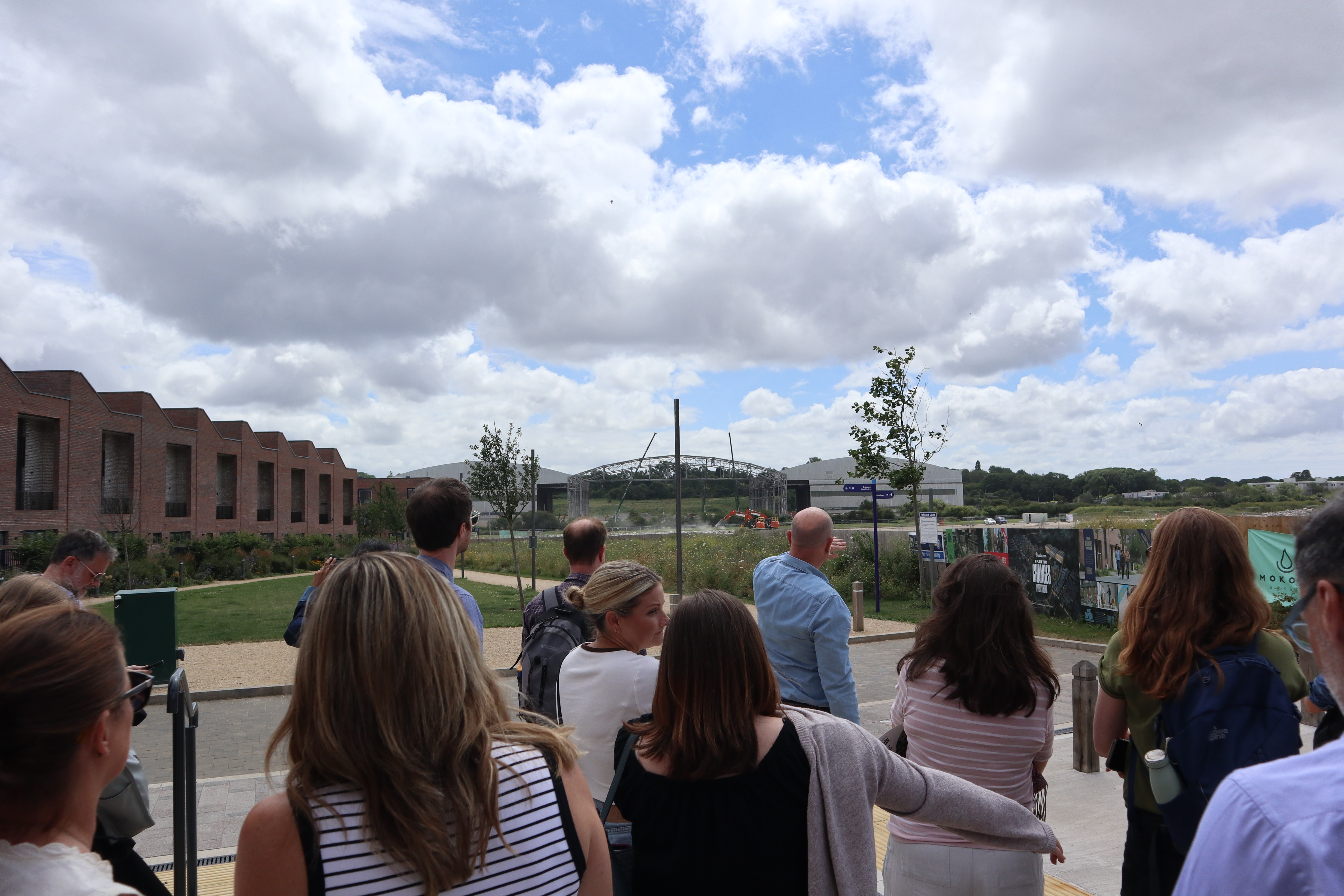
Brabazon is located on the former Filton Airfield, which played a pivotal role in British aviation and was where all the UK Concorde’s were built. Its name pays homage to the Bristol Brabazon aircraft.
YTL UK Group purchased the site in 2015 and have now completed phase one of its redevelopment with phase two in construction. Alongside this, the site’s anchor project, the Aviva arena, is also under construction and due to open in 2028. The arena will hold 20,000 people and is designed to draw populations from across the southwest of the UK: underpinning the mixed-use regeneration of the site and new transport connections into Bristol.
In 2024, planned homes increased from 2,500 to 6,500, and this number could increase again. South Gloucestershire’s emerging Local Plan is currently undergoing examination, with proposals that would release additional Green Belt land if supported by the Planning Inspectorate.
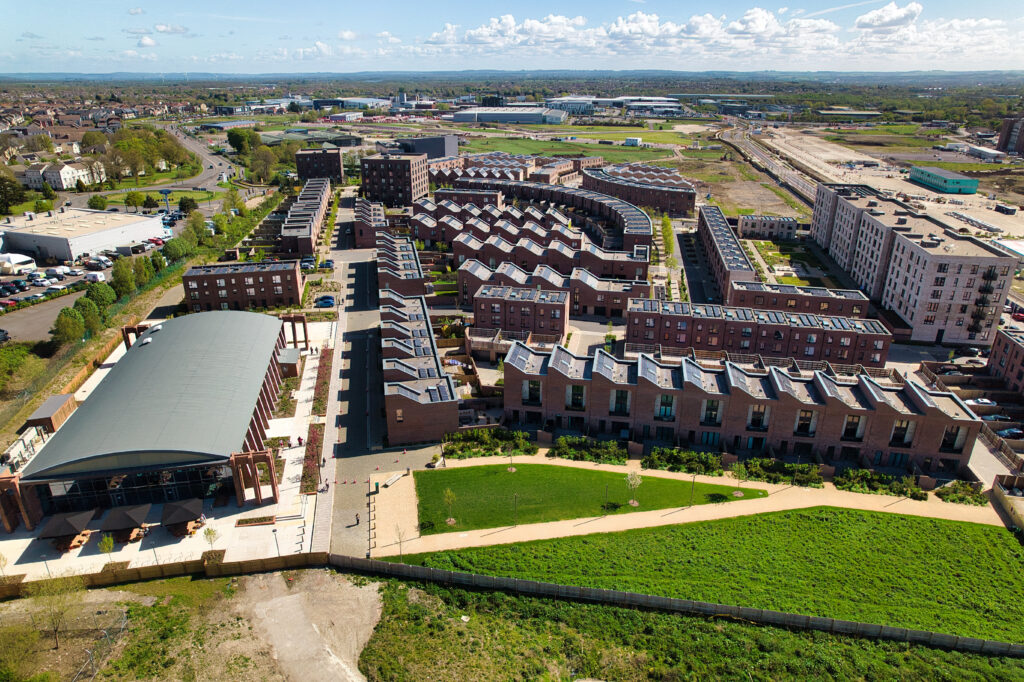
Credit YTL UK Group
Upfront infrastructure and the use of roof taxes
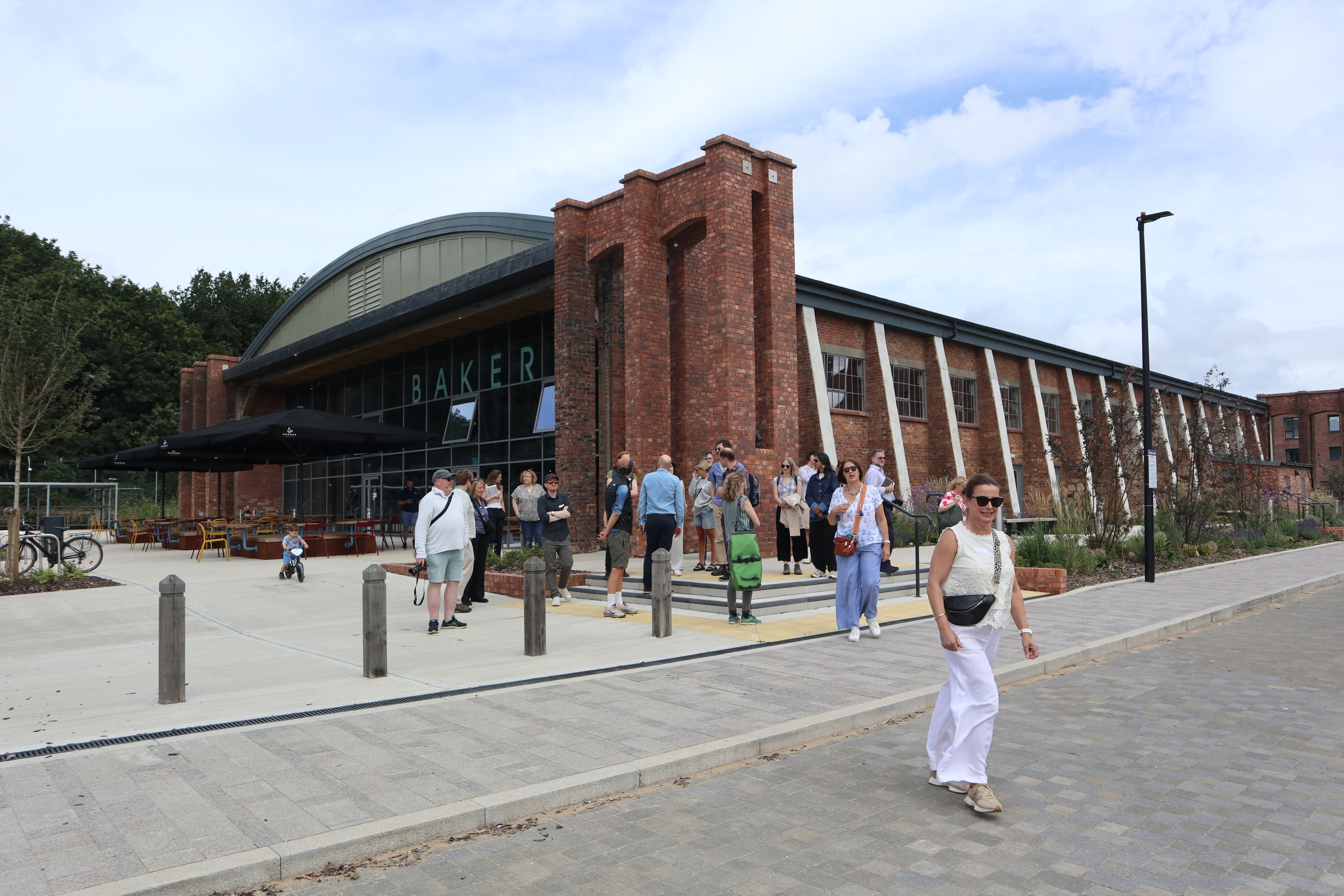
YTL describes its masterplanning approach as looking ahead over a 50-year timeframe. Although planning obligations did not require funding for a community centre until around 4,000 homes had been built, YTL chose to deliver one itself much earlier, repurposing the Grade II listed Spitfire Hangar to provide community space from around the 1,000-home mark. This is complemented by a dedicated community coordinator working on the site since the first residents moved in. The Spitfire Hangar community centre offers events, hireable spaces and an already bustling cafe. These show how having a master developer whose reputation is tied to a site’s long-term success can improve infrastructure sequencing.
However, Brabazon also highlights a weakness in Section 106 agreements for larger sites. In the growth area, roof taxes were implemented to fund infrastructure, equating to £20,000 per dwelling in Brabazon. However, since its agreement in 2018, despite being index-linked, the contribution has struggled to keep pace with significantly increasing construction costs – to the extent that school and health facility delivery will need to be revaluated. If strategic developments take decades to build, they will require more adaptive approaches to infrastructure funding.
Managing mid-to-high density housing alongside access to greenspaces
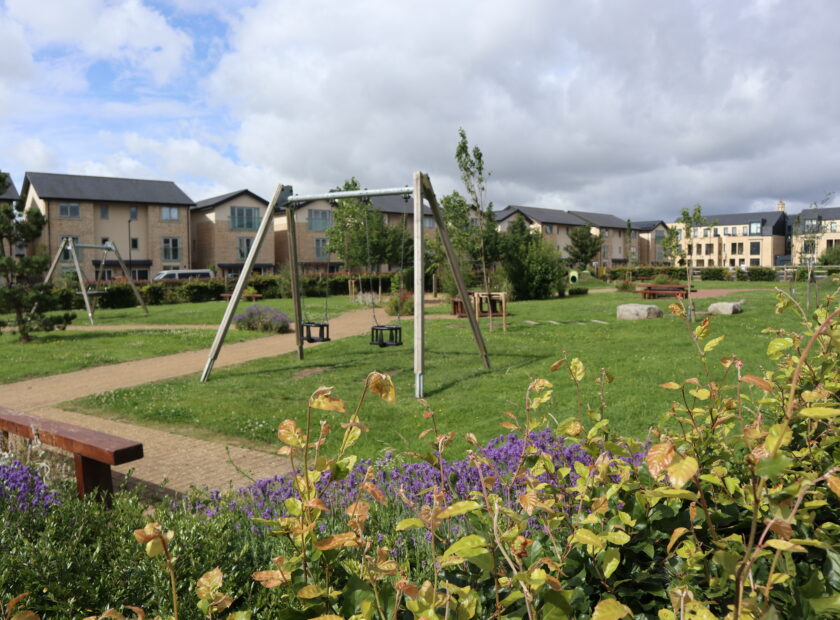
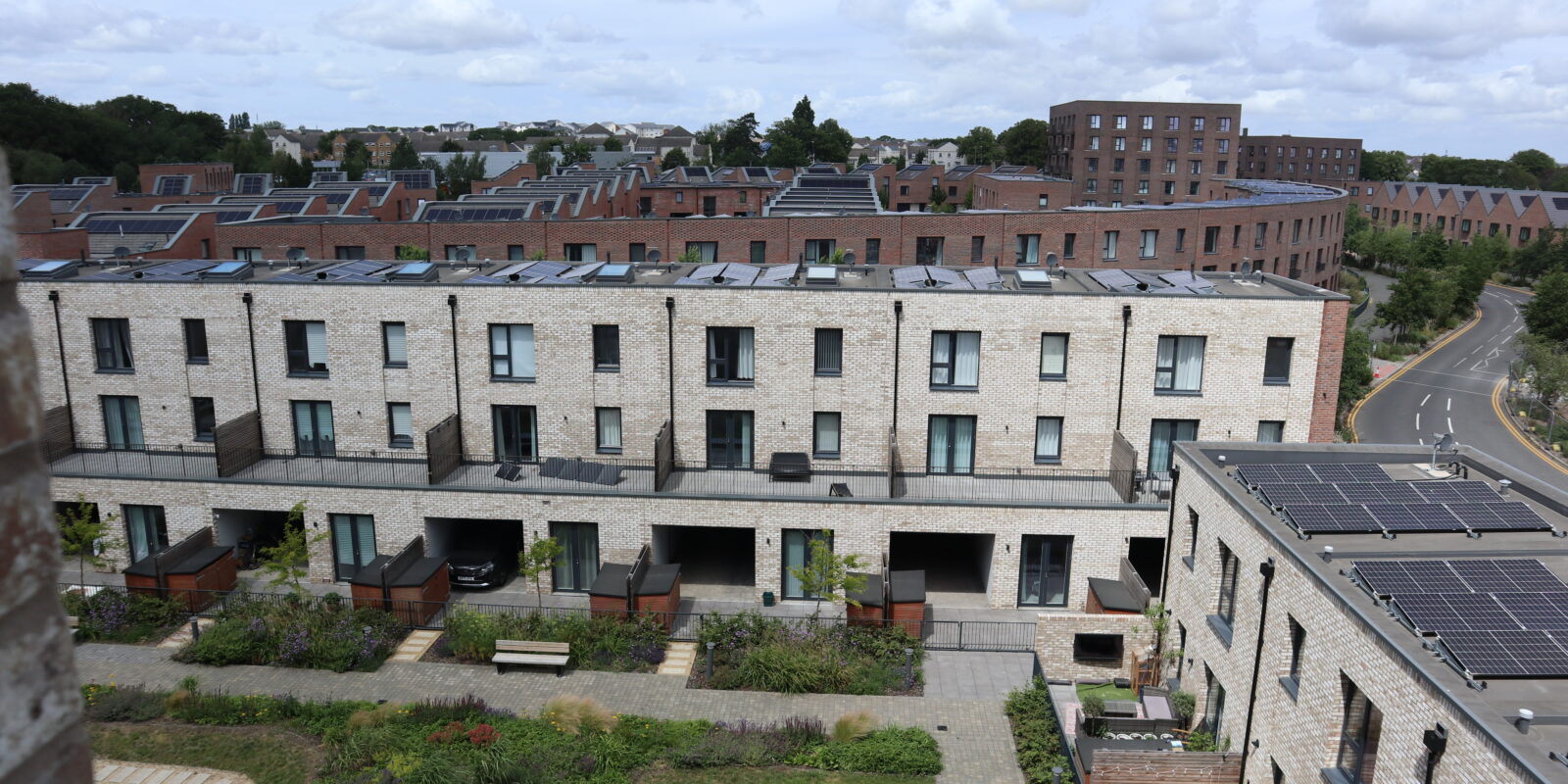
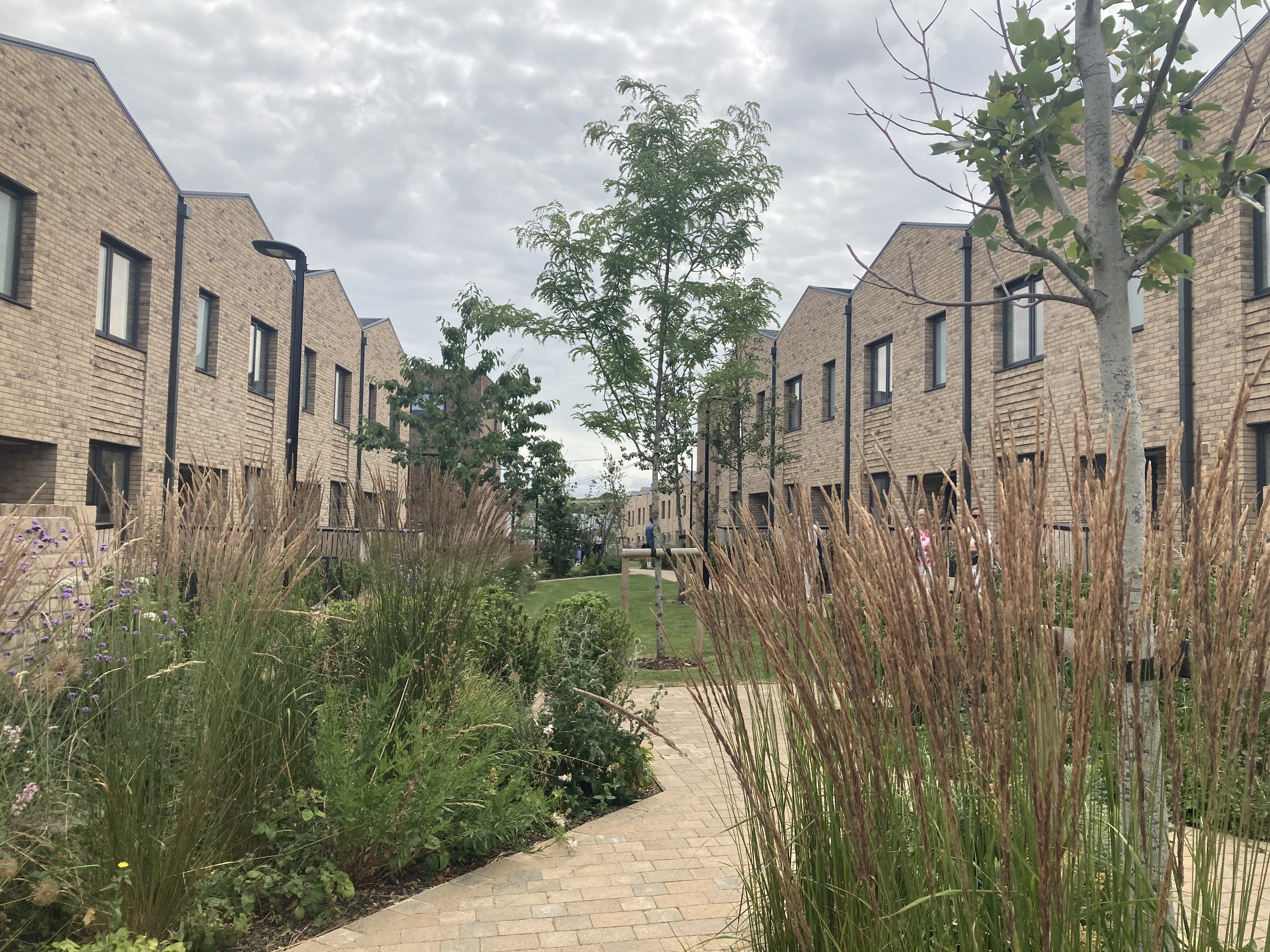
Brabazon also demonstrates one approach to delivering higher density housing while retaining access to greenspace. The UK has a strong history in mid density housing, and this plays a vital role in delivering resource efficient family homes while reducing the consumption of greenfield land. Brabazon incorporates a range of alternative layouts for this: terraces built above car ports, communal enclosed gardens for blocks of flats, and pedestrian-only green streets. Future flexibility has been designed into buildings, including car ports that can potentially be converted into additional living space as travel patterns change.
Planting is thriving throughout; it is well cared for and designed to be climate resilient. But phases one and two are yet to develop mature tree cover. The masterplan also details over 86 acres of parks and public spaces including the 15-acre Brabazon Park, due to open alongside the arena. Despite this, future biodiversity requirements may partially be met by offsite mitigation, which could reduce residents’ access to nature.
Coordinated transport infrastructure delivery
Brabazon has been supported by a close working relationship between local authorities and YTL through a dedicated steering group, helping coordinate infrastructure delivery. A large element of this has been bringing forward a new train station, due to open at the end of 2026, principally funded by the West of England Combined Authority. This will support arena attendees, 2/3rds of which are planned to arrive by sustainable transport. MetroBus services have also been running regularly through the site for five years, supported by dedicated bus lanes. Road improvements are being delivered in advance of major new destinations.
YTL are planning to introduce car clubs alongside walking and cycling infrastructure to lower car parking requirements. As well as wider connectivity, the developers aim to create a walkable, self-sufficient neighbourhood.
How infrastructure delivery has influenced affordability
The original consent included 17% affordable housing. The revised masterplan now delivers 26% overall, with later phases expected to achieve policy-compliant levels of 35% once major upfront infrastructure costs have been met.
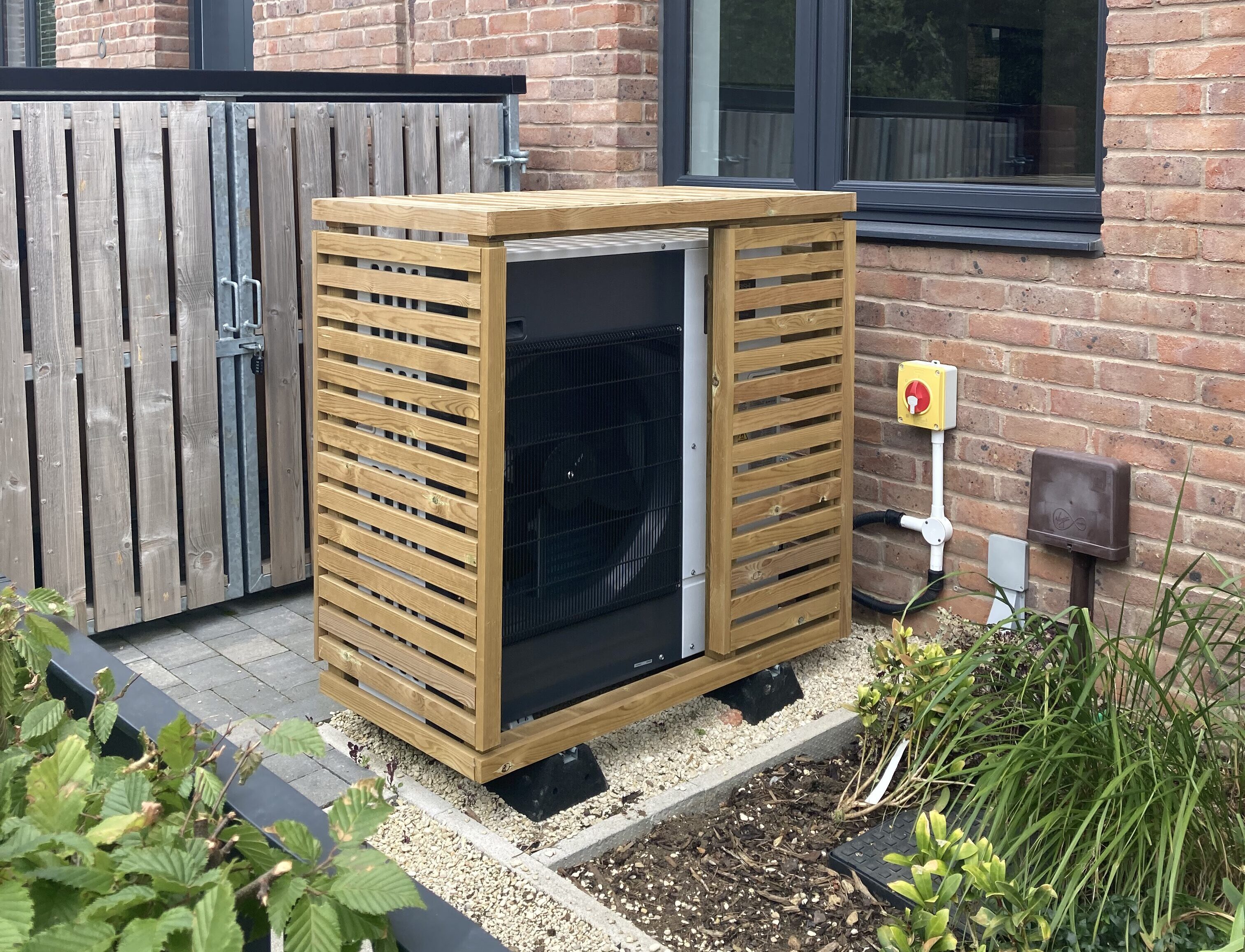
The first phase of housing relied on gas heating, but subsequent phases have moved to air source heat pumps, with homes achieving EPC A ratings.
Future mixed-uses proposed
The remaining phases will deliver mixed uses with the aim to create a self-sustaining neighbourhood. This is proposed to include 3 million sqft of commercial space, 30,000 new jobs, 2,000 student rooms, new health facilities, primary and secondary schools, and a mixed-use town centre next to the station, anchored by the arena.
YTL will be establishing commercial spaces from the outset by incorporating temporary structures. Prior to the town centre’s opening, meanwhile uses will help establish activity and test demand, such as for restaurants, before permanent development.
A long-term investment in the site
Brabazon suggests that a master developer with both long-term ownership and a commercial incentive to create a successful place can lead to earlier infrastructure and faster delivery. So why are the majority of new homes being delivered through piecemeal development – where developers don’t have a stake in the area’s long-term success? By further supporting the master developer model, government could increase place and stewardship quality in new housing.
I will continue to explore this theme in the next New Communities Group Study Tour blog. This will reflect on Mulberry Park, a development being brought forward by the housing association Curo.
Data in this blog was gathered from the study visit to Brabazon hosted by South Gloucestershire Council and YTL Developments UK. Local authority officers can find out more and join the TCPA’s New Communities Group here.